Linear Motion (Type 2)

AP  Questions Type 2: Linear Motion

We continue the discussion of the various type questions on the AP Calculus Exams with linear motion questions.

“A particle (or car, person, or bicycle) moves on a number line ….”

These questions may give the position equation, the velocity equation (most often), or the acceleration equation of something that is moving on the x– or y-axis as a function of time, along with an initial condition. The questions ask for information about motion of the particle: its direction, when it changes direction, its maximum position in one direction (farthest left or right), its speed, etc.

The particle may be a “particle,” a person, car, a rocket, etc.  Particles don’t really move in this way, so the equation or graph should be considered to be a model. The question is a versatile way to test a variety of calculus concepts since the position, velocity, or acceleration may be given as an equation, a graph, or a table; be sure to use examples of all three forms during the review.

Many of the concepts related to motion problems are the same as those related to function and graph analysis (Type 3). Stress the similarities and show students how the same concepts go by different names. For example, finding when a particle is “farthest right” is the same as finding the when a function reaches its “absolute maximum value.” See my post for Motion Problems: Same Thing, Different Context for a list of these corresponding terms. There is usually one free-response question and three or more multiple-choice questions on this topic.

The positions(t), is a function of time. The relationships are:

  • The velocity is the derivative of the position, {s}'\left( t \right)=v\left( t \right). Velocity is has direction (indicated by its sign) and magnitude. Technically, velocity is a vector; the term “vector” will not appear on the AB exam.
  • Speed is the absolute value of velocity; it is a number, not a vector. See my post for Speed.
  • Acceleration is the derivative of velocity and the second derivative of position, \displaystyle a\left( t \right)={v}'\left( t \right)={{s}''}\left( t \right). It, too, has direction and magnitude and is a vector.
  • Velocity is the antiderivative of the acceleration.
  • Position is the antiderivative of velocity.

What students should be able to do:

  • Understand and use the relationships above.
  • Distinguish between position at some time and the total distance traveled during the time period.
  • The total distance traveled is the definite integral of the speed (absolute value of velocity) \displaystyle \int_{a}^{b}{\left| v\left( t \right) \right|}\,dt.
  •  Be sure your students understand the term displacement; it is the net distance traveled or distance between the initial position and the final position. Displacement, is the definite integral of the velocity (rate of change): \displaystyle \int_{a}^{b}{v\left( t \right)}\,dt.
  • The final position is the initial position plus the displacement (definite integral of the rate of change from xa to x = t): \displaystyle s\left( t \right)=s\left( a \right)+\int_{a}^{t}{v\left( x \right)}\,dx Notice that this is an accumulation function equation (Type 1).
  • Initial value differential equation problems: given the velocity or acceleration with initial condition(s) find the position or velocity. These are easily handled with the accumulation equation in the bullet above, but may also be handled as an initial value problem.
  • Find the speed at a given time. The speed is the absolute value of the velocity.
  • Find average speed, velocity, or acceleration
  • Determine if the speed is increasing or decreasing.
    • If at some time, the velocity and acceleration have the same sign then the speed is increasing.If they have different signs the speed is decreasing.
    • If the velocity graph is moving away from (towards) the t-axis the speed is increasing (decreasing). See the post on Speed.
    • There is also a worksheet on speed here
    • The analytic approach to speed: A Note on Speed
  • Use a difference quotient to approximate the derivative (velocity or acceleration) from a table. Be sure the work shows a quotient.
  • Riemann sum approximations.
  • Units of measure.
  • Interpret meaning of a derivative or a definite integral in context of the problem

Shorter questions on this concept appear in the multiple-choice sections. As always, look over as many questions of this kind from past exams as you can find.

This may be an AB or BC question. The BC topic of motion in a plane, (Type 8: parametric equations and vectors) will be discussed in a later post.

The Linear Motion problem may cover topics primarily from primarily from Unit 4, and also from Unit 3, Unit 5, Unit 6, and Unit 8 (for BC) of the 2019 CED

Free-response examples:

  • Equation stem 2017 AB 5,
  • Graph stem: 2009 AB1/BC1,
  • Table stem 2019 AB2

Multiple-choice examples from non-secure exams:

  • 2012 AB 6, 16, 28, 79, 83, 89
  • 2012 BC 2, 89


Rate & Accumulation (Type 1)

The Free-response Questions

There are ten general categories of AP Calculus free-response questions.

NOTE: The type number I’ve assigned to each type DO NOT correspond to the 2019 CED Unit numbers. Many AP Exam questions have parts from different Units. The CED Unit numbers will be referenced in each post.


AP  Questions Type 1: Rate and Accumulation

These questions are often in context with a lot of words describing a situation in which some things are changing. There are usually two rates acting in opposite ways (sometimes called an in-out question). Students are asked about the change that the rates produce over some time interval either separately or together.

The rates are often fairly complicated functions. If they are on the calculator allowed section, students should store the functions in the equation editor of their calculator and use their calculator to do any graphing,  integration, or differentiation that may be necessary.

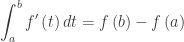
The main idea is that over the time interval [a, b] the integral of a rate of change is the net amount of change

\displaystyle \int_{a}^{b}{{f}'\left( t \right)dt}=f\left( b \right)-f\left( a \right)

If the question asks for an amount, look around for a rate to integrate.

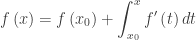
The final (accumulated) amount is the initial amount plus the accumulated change:

\displaystyle f\left( x \right)=f\left( {{x}_{0}} \right)+\int_{{{x}_{0}}}^{x}{{f}'\left( t \right)}\,dt,

where {{x}_{0}} is the initial time, and  f\left( {{x}_{0}} \right) is the initial amount. Since this is one of the main interpretations of the definite integral the concept may come up in a variety of situations.

What students should be able to do:

  • Be ready to read and apply; often these problems contain a lot of writing which needs to be carefully read.
  • Recognize that rate = derivative.
  • Recognize a rate from the units given without the words “rate” or “derivative.”
  • Find the change in an amount by integrating the rate. The integral of a rate of change gives the amount of change (FTC):

\displaystyle \int_{a}^{b}{{f}'\left( t \right)dt}=f\left( b \right)-f\left( a \right).

  • Find the final amount by adding the initial amount to the amount found by integrating the rate. If x={{x}_{0}} is the initial time, and f\left( {{x}_{0}} \right)  is the initial amount, then final accumulated amount is

\displaystyle f\left( x \right)=f\left( {{x}_{0}} \right)+\int_{{{x}_{0}}}^{x}{{f}'\left( t \right)}\,dt,

  • Write an integral expression that gives the amount at a general time. BE CAREFUL, the dt must be included at the correct place. Think of the integral sign and the dt as parentheses around the integrand.
  • Find the average value of a function
  • Understand the question. It is often not necessary to as much computation as it seems at first.
  • Use FTC to differentiate a function defined by an integral.
  • Explain the meaning of a derivative or its value in terms of the context of the problem. The explanation should contain (1) what it represents, (2) its units, and (3) how numerical argument applies in context.
  • Explain the meaning of a definite integral or its value in terms of the context of the problem. The explanation should contain (1) what it represents, (2) its units, and (3) how the limits of integration apply in context.
  • Store functions in their calculator recall them to do computations on their calculator.
  • If the rates are given in a table, be ready to approximate an integral using a Riemann sum or by trapezoids.
  • Do a max/min or increasing/decreasing analysis.

Shorter questions on this concept appear in the multiple-choice sections. As always, look over as many questions of this kind from past exams as you can find.

The Rate – Accumulation question may cover topics primarily from Unit 4, Unit 5, Unit 6 and Unit 8 of the 2019 CED.

Typical free-response examples:

Typical multiple-choice examples from non-secure exams:

  • 2012 AB 8, 81, 89
  • 2012 BC 8 (same as AB 8)


Updated January 31, 2019, March 12, 2021

Good Question 17

A common question in (older?) textbooks is to give students a function or relation and have them graph it without technology (because in the old days technology was not available). Students had to find all the appropriate information without hints or further direction: they were supposed to know what to do and do it.

AP exam questions, for legitimate and understandable reasons, do not ask for as complete an analysis. Rather, they ask students to find specific information about the function or its graph (extreme values, points of inflection, etc.). For the same legitimate and understandable reason many of the features are not considered; the other concepts are tested on different questions.

I think that the full-analysis-from-scratch approach, while not appropriate for an AP exam question, has its merits. The big difference is that students need to be creative in their investigation; not just focus on a few items pointed to by the question.

With that in mind, let’s consider the following question asked three ways.

A very general form

Consider the relation {{x}^{3}}+3{{x}^{2}}+{{y}^{2}}=4. Discuss the graph of the relation giving reasons for your conclusions. Include a brief mention of any unproductive paths you followed and what you learned from them.

A more directed investigation

Consider the relation {{x}^{3}}+3{{x}^{2}}+{{y}^{2}}=4. Find its extreme values and any asymptotes, and vertical tangents (if any). Discuss in detail the appearance of the graph near x = –2 and discuss the slopes in that area. Explain how you arrived at your results.

Closer to an AP style form. The function here is the top half of the function above.

Consider the function y=\sqrt{{4-{{x}^{3}}-3{{x}^{2}}}}.

(a) Find the local maximum and minimum values of the function. Justify your answer.

(b) Where does the function had a vertical asymptote? Justify your answer.

(c) Find \underset{{x\to -2-}}{\mathop{{\lim }}}\,\frac{{dy}}{{dx}} and \underset{{x\to -2+}}{\mathop{{\lim }}}\,\frac{{dy}}{{dx}}. What does this say about the graph?

The real question is can you ask it the first way?

Here is my solution to the first form; this will also give the answers to the other forms. After the solution, I’ll discuss some ideas on how to score such a solution.

Solution

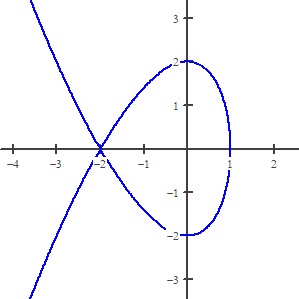
The graph of the relation  {{x}^{3}}+3{{x}^{2}}+{{y}^{2}}=4.  is shown in figure 1.

Figure 1

The domain of the function is x\le 1. Values greater than 1 will make the left side of the equation greater than 4 regardless of the value of y. The range of the relation is all real numbers.


The function is symmetric to the x-axis since substituting (–y) for y will give the same expression. The equation of the top half is  y=\sqrt{{4-{{x}^{3}}-3{{x}^{2}}}} and the lower half is y=-\sqrt{{4-{{x}^{3}}-3{{x}^{2}}}}

The derivative for the top half is \displaystyle {y}'=-\frac{{3{{x}^{2}}+6x}}{{2y}}=-\frac{{3{{x}^{2}}+6x}}{{2\sqrt{{4-{{x}^{3}}-{3{x}^{2}}}}}} by implicit differentiation or by differentiating the equation for the top half.

y'\left( x \right) does not exist at x = 1 specifically, \displaystyle \underset{{x\to 1-}}{\mathop{{\lim }}}\,{y}'\left( x \right)=-\infty . Therefore, the line x = 1 is a vertical tangent. By symmetry for the lower part of the graph \displaystyle \underset{{x\to 1-}}{\mathop{{\lim }}}\,{y}'\left( x \right)=+\infty .  And x = 1 is its vertical asymptote as well. The slope of the original relation changes from positive to negative at x = 1 by going not through zero but from  -\infty to +\infty .

{y}'\left( x \right)=0 when x = 0 and when x = –2. At (0, 2) the derivative changes from positive to negative; this is a local maximum point by the first derivative test. The lower half has a local minimum point at (0, –2) by symmetry.

At (–2, 0) the derivative is an indeterminate form of the type 0/0.

False step: At first, I thought this meant that the two sides were tangent to the line x = –2 making the point (–2, 0) on the top half a cusp. I tried to see if this was true by graphing in a very narrow window. This did not show anything: the graph looked on zooming in, like an absolute value graph. It turned out that an absolute value was involved.

I then made a table of values for the derivative near the point and found that the values appeared to be approaching a number near –1.7 from the left and near +1.7 from the right. I started thinking maybe \displaystyle \sqrt{3}.

Then I changed the constants to parameters and played with the sliders on Desmos (here). With a slight change in the constants the graph appeared to have a nice rounded local minimum near x= –2. Other values showed two separate pieces with vertical tangents near x= –2. This confused me even more.

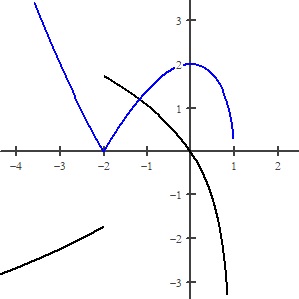
Next, I did what I should have done earlier: I graphed the top half and its derivative (figure 2):

Figure 2. The top half in blue and its derivative in black.

The derivative has a finite jump discontinuity at x = –2. I remembered seeing this kind of thing before and thought it involved an absolute value of some kind. Still confused, I decided to investigate the derivative further (which I also should have done sooner).

The derivative at x = –2 is an indeterminate form of the 0/0 type. This means that by substituting you get an expression that really doesn’t help; you may still evaluate the limit (remember derivatives are limits) by other methods. Factoring the derivative (using synthetic division on the radicand) gives

\displaystyle {y}'\left( x \right)=-\frac{{3x\left( {x+2} \right)}}{{2\sqrt{{{{{\left( {x+2} \right)}}^{2}}\left( {1-x} \right)}}}}=-\frac{{3x\left( {x+2} \right)}}{{2\sqrt{{{{{\left( {x+2} \right)}}^{2}}}}\sqrt{{1-x}}}}=-\frac{{3x}}{{\sqrt{{1-x}}}}\frac{{x+2}}{{\left| {x+2} \right|}}

And now we see that

\displaystyle \underset{{x\to -2-}}{\mathop{{\lim }}}\,\frac{{-3x}}{{2\sqrt{{1-x}}}}\cdot \frac{{x+2}}{{\left| {x+2} \right|}}=-\sqrt{3}  and  \displaystyle \underset{{x\to -2+}}{\mathop{{\lim }}}\,\frac{{-3x}}{{2\sqrt{{1-x}}}}\cdot \frac{{x+2}}{{\left| {x+2} \right|}}=\sqrt{3}

This agrees with the derivative’s graph. The top graph (and bottom’s by symmetry) comes to an arrow-like point (sometimes called a node) at (–2, 0). The slope on the left approaches -\sqrt{3} and on the right approaches +\sqrt{3}.

______________________

I admit I’ve had a few more years of experience with this sort of thing that a first-year calculus student. I expect this would be difficult for most students who have never seen a question like this, so working up to it with simpler questions is how to start.

In grading this sort of question, you need to consider:

  1. If the student found and justified all the pertinent features of the graph. If they missed something, what they included may still be pretty good. For example, I would not expect a student to the use the word “node,” so omitting it should not be held against them and using it may call for praise.
  2. The things they (and I) may have overlooked or things they considered that were unnecessary or even wrong.
  3. Their overall approach. This last may be the most important part. Including their missteps and unproductive paths is important and should, I think, receive credit. After all, they did not know the path would be unproductive until they followed it a way. Hopefully, they made some missteps and learned something from them. That’s what investigating something in math entails.

I would be happy to hear if you tried this or something similar and so would the other readers of this blog. Please use the “Comment” button below to share your thoughts.


π from Collisions

One of my sons sent me the link to the videos below. They show a very unusual way to find the digits of π. The problems and its two solutions show the connections and the interplay between mathematics and physics. The quality of the illustrations and the verbal explanations are excellent.

Here are the main concepts used in solving the problem:

From physics:

  • Conservation of energy,
  • Conservation of momentum,
  • Phase space,
  • Phase diagram,
  • Optics (angle of incidence equals angle of reflection),
  • Dot product and column vectors.

From high school math:

  • Geometry (the inscribed angle theorem),
  • Simultaneous equations,
  • Analytic geometry,
  • Equation of a line and translations,
  • Equation of a circle.

From calculus:

  • power series for the Inverse Tangent function,
  • related rates,
  • error analysis (not the Lagrange or alternating series error bounds),
  • slope in parametric form dy/dt, and dx/dt.

Here are the videos. (The second should open after the first, and the third after the second; or, you may click on one at a time.)

The most unexpected answer to a counting puzzle (5:12)

So why do colliding blocks compute pi? (15.15)

How colliding blocks act like a beam of light … to compute pi  (14:40)


The videos are on the YouTube site 3blue1brown, by Grant Sanderson. The site describes itself as some combination of math and entertainment, depending on your disposition. The goal is for explanations to be driven by animations and for difficult problems to be made simple with changes in perspective.

The site contains a number of other videos that look like they are worth watching.


Asymptotes and the Derivative

What does an asymptote of the derivative tell you about the function? How do asymptotes of a function appear in the graph of the derivative?

One of my most read posts is Reading the Derivative’s Graph, first published seven years ago. The long title is “Here’s the graph of the derivative; tell me about the function.” It tells how to quickly find information about the graph of a function from the derivative’s graph. I received a question from a reader recently that asked about asymptotes and the derivative, a topic that I did not cover in that post. So, I tried to find the relationship. The short answer is that an asymptote of the derivatives does not tell you much about the graph of the function. (This is probably why the idea has never been tested on the AP Calculus Exams.)

Nevertheless, there is some calculus to be learned here. You may be able to find some questions for your students to investigate on this topic. Here’s what i determined.

Before we start, here are two terms that are useful, but not commonly used.

  • An even vertical asymptote is one for which the function increases or decreases without limit on both sides of the asymptote. In other words, as x approaches a the function approaches infinity or negative infinity from both sides. The function f\left( x \right)=\frac{1}{{{{{\left( {x-2} \right)}}^{2}}}} has an even vertical asymptote at x = 2. (Figure 1)
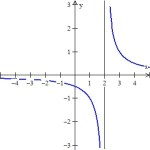
  • An odd vertical asymptote is one for which the function increases without bound on one side and decreases without bound on the other. The function g\left( x \right)=\frac{1}{{x-2}} has an odd vertical asymptote at x = 2. (Figure 2) Likewise, the tangent, cotangent, secant, and cosecant functions have odd vertical asymptotes.
If a function has an odd vertical asymptote, then its derivative will have an even vertical asymptote. (Ask your students to explain why.)

If a function has an even vertical asymptote, then its derivative will have an odd vertical asymptote. (Ask your students to explain why.)

The converses of these two statements are false. That is, a vertical asymptote of the derivative does not necessarily indicate an asymptote of the function. The catch is continuity.

Continuous Functions

If the derivative exists at xa, then the function is continuous there. But, since we are considering asymptotes of the derivative, we cannot know from the derivative alone if the function is continuous where the derivative has an asymptote.

A simple cusp is a situation in which at an extreme point the graph is tangent to a vertical line. See Figure 3. (Or, you could say, the tangent lines from each side are coincident. Here we will limit the discussion to a vertical tangent line.) A continuous function that has a cusp will show an odd vertical asymptote on its derivative’s graph. 

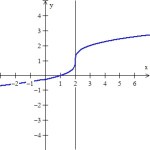
An example is\displaystyle h\left( x \right)=\sqrt[3]{{{{{\left( {x-2} \right)}}^{2}}}}+1  that has a cusp at the point (2,1). (Figure 3).

A continuous function that has a vertical tangent line not a cusp, has an even vertical asymptote on its derivative’s graph. For example, k\left( x \right)={{\left( {x-2} \right)}^{{1/3}}}+1 at (2,0) (Figure 4).

If you are given the graph of the derivative and it shows a vertical asymptote at x = a, and you know the function is continuous there, then

  • an odd vertical asymptote of the derivative indicates cusp on the graph of the function. This will also be an extreme value. (Ask your students to explain why.)
  • an even vertical asymptote of the derivative indicates vertical tangent line on the graph of the function, but not an extreme value. (Ask your students to explain why.)

Other than these, there is no easy way to tell what situation produced an asymptote on the derivative.

Functions that are not continuous

If the function is not continuous at xa, then things get a lot more complicated.

  • If the function is not continuous at x = a, then an even vertical asymptote of the derivative may indicate an odd vertical asymptote on the graph of the function. There is no way to be sure.
  • If the function is not continuous at x = a, then an odd vertical asymptote of the derivative may indicate an even vertical asymptote on the graph of the function. There is no way to be sure.

Consider this function: \displaystyle z\left( x \right)=\left\{ {\begin{array}{*{20}{c}} {\sqrt[3]{{{{{\left( {x-2} \right)}}^{2}}}}-1} & {x<2} \\ {\sqrt[3]{{{{{\left( {x-2} \right)}}^{2}}}}+1} & {x\ge 2} \end{array}} \right.

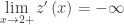
See Figure 5. The function is defined for all Real numbers and has a jump discontinuity at x = 2. The derivative has an odd vertical asymptote there: \displaystyle \underset{{x\to 2-}}{\mathop{{\lim }}}\,{z}'\left( x \right)=-\infty and \displaystyle \underset{{x\to 2+}}{\mathop{{\lim }}}\,{z}'\left( x \right)=-\infty . Compare this with h(x) above.

In fact,\displaystyle {h}'\left( x \right)={z}'\left( x \right)=\tfrac{2}{3}{{\left( {x-2} \right)}^{{-1/3}}},x\ne 2. Go figure.

For considerations of horizontal asymptotes and the derivative see Other Asymptotes 


2019 CED Unit 5 Analytical Applications of Differentiation

Unit 5 covers the application of derivatives to the analysis of functions and graphs. Reasoning and justification of results are also important themes in this unit. (CED – 2019 p. 92 – 107). These topics account for about 15 – 18% of questions on the AB exam and 8 – 11% of the BC questions.

Reasoning and writing justification of results are mentioned and stressed in the introduction to the topic (p. 93) and for most of the individual topics. See Learning Objective FUN-A.4 “Justify conclusions about the behavior of a function based on the behavior of its derivatives,” and likewise in FUN-1.C for the Extreme value theorem, and FUN-4.E for implicitly defined functions. Be sure to include writing justifications as you go through this topic. Use past free-response questions as exercises and also as guide as to what constitutes a good justification. Links in the margins of the CED are also helpful and give hints on writing justifications and what is required to earn credit. See the presentation Writing on the AP Calculus Exams and its handout

Topics 5.1

Topic 5.1 Using the Mean Value Theorem While not specifically named in the CED, Rolle’s Theorem is a lemma for the Mean Value Theorem (MVT). The MVT states that for a function that is continuous on the closed interval and differentiable over the corresponding open interval, there is at least one place in the open interval where the average rate of change equals the instantaneous rate of change (derivative). This is a very important existence theorem that is used to prove other important ideas in calculus. Students often confuse the average rate of change, the mean value, and the average value of a function – See What’s a Mean Old Average Anyway?

Topics 5.2 – 5.9

Topic 5.2 Extreme Value Theorem, Global Verses Local Extrema, and Critical Points An existence theorem for continuous functions on closed intervals

Topic 5.3 Determining Intervals on Which a Function is Increasing or Decreasing Using the first derivative to determine where a function is increasing and decreasing.

Topic 5.4 Using the First Derivative Test to Determine Relative (Local) Extrema Using the first derivative to determine local extreme values of a function

Topic 5.5 Using the Candidates’ Test to Determine Absolute (Global) Extrema The Candidates’ test can be used to find all extreme values of a function on a closed interval

Topic 5.6 Determining Concavity of Functions on Their Domains FUN-4.A.4 defines (at least for AP Calculus) When a function is concave up and down based on the behavior of the first derivative. (Some textbooks may use different equivalent definitions.) Points of inflection are also included under this topic.

Topic 5.7 Using the Second Derivative Test to Determine Extrema Using the Second Derivative Test to determine if a critical point is a maximum or minimum point. If a continuous function has only one critical point on an interval, then it is the absolute (global) maximum or minimum for the function on that interval.

Topic 5.8 Sketching Graphs of Functions and Their Derivatives. First and second derivatives give graphical and numerical information about a function and can be used to locate important points on the graph of the function.

Topic 5.9 Connecting a Function, Its First Derivative, and Its Second Derivative. First and second derivatives give graphical and numerical information about a function and can be used to locate important points on the graph of the function.

Topics 5.10 – 5.11

Optimization is important application of derivatives. Optimization problems as presented in most text books, begin with writing the model or equation that describes the situation to be optimized. This proves difficult for students, and is not “calculus” per se. Therefore, writing the equation has not be asked on AP exams in recent years (since 1983). Questions give the expression to be optimized and students do the “calculus” to find the maximum or minimum values. To save time, my suggestion is to not spend too much time writing the equations; rather concentrate on finding the extreme values.

Topic 5.10 Introduction to Optimization Problems 

Topic 5.11 Solving Optimization Problems

Topics 5.12

Topic 5.12 Exploring Behaviors of Implicit Relations Critical points of implicitly defined relations can be found using the technique of implicit differentiation. This is an AB and BC topic. For BC students the techniques are applied later to parametric and vector functions.


Timing

Topic 5.1 is important and may take more than one day. Topics 5.2 – 5.9 flow together and for graphing they are used together; after presenting topics 5.2 – 5.7 spend the time in topics 5.8 and 5.9 spiraling and connecting the previous topics. Topics 5.10 and 5.11 – see note above and spend minimum time here. Topic 5.12 may take 2 days.

The suggested time for Unit 5 is 15 – 16 classes for AB and 10 – 11 for BC of 40 – 50-minute class periods, this includes time for testing etc.

Finally, were I still teaching, I would teach this unit before Unit 4. The linear motion topic (in Unit 4) are a special case of the graphing ideas in Unit 5, so it seems reasonable to teach this unit first. See Motion Problems: Same thing, Different Context


Previous posts on these topics include:

Then There Is This – Existence Theorems

What’s a Mean Old Average Anyway

Did He, or Didn’t He?   History: how to find extreme values without calculus

Mean Value Theorem

Foreshadowing the MVT

Fermat’s Penultimate Theorem

Rolle’s theorem

The Mean Value Theorem I

The Mean Value Theorem II

Graphing

Concepts Related to Graphs

The Shapes of a Graph

Joining the Pieces of a Graph

Extreme Values

Extremes without Calculus

Concavity

Reading the Derivative’s Graph

Real “Real-life” Graph Reading

Far Out! An exploration

Open or Closed  Should intervals of increasing, decreasing, or concavity be open or closed?

Others

Lin McMullin’s Theorem and More Gold  The Golden Ratio in polynomials

Soda Cans  Optimization video

Optimization – Reflections   

Curves with Extrema?

Good Question 10 – The Cone Problem

Implicit Differentiation of Parametric Equations    BC Topic


Here are links to the full list of posts discussing the ten units in the 2019 Course and Exam Description.

2019 CED – Unit 1: Limits and Continuity

2019 CED – Unit 2: Differentiation: Definition and Fundamental Properties.

2019 CED – Unit 3: Differentiation: Composite , Implicit, and Inverse Functions

2019 CED – Unit 4 Contextual Applications of the Derivative  Consider teaching Unit 5 before Unit 4

2019 – CED Unit 5 Analytical Applications of Differentiation  Consider teaching Unit 5 before Unit 4

2019 – CED Unit 6 Integration and Accumulation of Change

2019 – CED Unit 7 Differential Equations  Consider teaching after Unit 8

2019 – CED Unit 8 Applications of Integration   Consider teaching after Unit 6, before Unit 7

2019 – CED Unit 9 Parametric Equations, Polar Coordinates, and Vector-Values Functions 

2019 CED Unit 10 Infinite Sequences and Series


2019 CED Unit 4: Contextual Applications of the Derivative

Unit 4 covers rates of change in motion problems and other contexts, related rate problems, linear approximation and L’Hospital’s Rule. (CED – 2019 p. 82 – 90). These topics account for about 10 – 15% of questions on the AB exam and 6 – 9% of the BC questions.

Topics 4.1 – 4.6

Topic 4.1 Interpreting the Meaning of the Derivative in Context Students learn the meaning of the derivative in situations involving rates of change.

Topic 4.2 Linear Motion The connections between position, velocity, speed, and acceleration. This topic may work  better after the graphing problems in Unit 5, since many of the ideas are the same. See Motion Problems: Same Thing, Different Context

Topic 4.3 Rates of Change in Contexts Other Than Motion Other applications

Topic 4.4 Introduction to Related Rates Using the Chain Rule

Topic 4.5 Solving Related Rate Problems

Topic 4.6 Approximating Values of a Function Using Local Linearity and Linearization The tangent line approximation

Topic 4.7 Using L’Hospital’s Rule for Determining Limits of Indeterminate Forms. Indeterminate Forms of the type \displaystyle \tfrac{0}{0} and \displaystyle \tfrac{\infty }{\infty }. (Other forms may be included, but only these two are tested on the AP exams.)

Topic 4.1 and 4.3 are included in the other topics, topic 4.2 may take a few days, Topics 4.4 – 4.5 are challenging for many students and may take 4 – 5 classes, 4.6 and 4.7 two classes each. The suggested time is 10 -11 classes for AB and 6 -7 for BC. of 40 – 50-minute class periods, this includes time for testing etc.


Posts on these topics include:

Motion Problems 

Motion Problems: Same Thing, Different Context

Speed

A Note on Speed

Related Rates

Related Rate Problems I

Related Rate Problems II

Good Question 9 – Related rates

Linear Approximation

Local Linearity 1

Local Linearity 2 

L’Hospital’s Rule

Locally Linear L’Hôpital  

L’Hôpital Rules the Graph  

Determining the Indeterminate

Determining the Indeterminate 2


Here are links to the full list of posts discussing the ten units in the 2019 Course and Exam Description.

2019 CED – Unit 1: Limits and Continuity

2019 CED – Unit 2: Differentiation: Definition and Fundamental Properties.

2019 CED – Unit 3: Differentiation: Composite , Implicit, and Inverse Functions

2019 CED – Unit 4 Contextual Applications of the Derivative  Consider teaching Unit 5 before Unit 4

2019 – CED Unit 5 Analytical Applications of Differentiation  Consider teaching Unit 5 before Unit 4

2019 – CED Unit 6 Integration and Accumulation of Change

2019 – CED Unit 7 Differential Equations  Consider teaching after Unit 8

2019 – CED Unit 8 Applications of Integration   Consider teaching after Unit 6, before Unit 7

2019 – CED Unit 9 Parametric Equations, Polar Coordinates, and Vector-Values Functions 

2019 CED Unit 10 Infinite Sequences and Series