Applications of Integration – Volume

One of the major applications of integration is to find the volumes of various solid figures.

Volume of Solids with Regular Cross-sections  This is where to start with volume problems. After all, solids of revolution are just a special case of solids with regular cross-sections.

Volumes of Revolution

Subtract the Hole from the Whole and Does Simplifying Make Things Simpler?

Visualizing Solid Figures

Why you Never Need Cylindrical Shells

Painting a Point


Revised and update October 22, 2018

Y the FTC?

So, you’ve finally proven the Fundamental Theorem of Calculus and have written on the board:
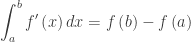
\displaystyle \int_{a}^{b}{{{f}'\left( x \right)dx=f\left( b \right)-f\left( a \right)}}

And the students ask, “What good is that?” and “When are we ever going to use that?” Here’s your answer.

There are two very important uses of this theorem. Show them BOTH uses right away to help your students see why the FTC is so useful and important.

First, in words the theorem says that “the integral of a rate of change is the net amount of change.” So, if you are given a rate of change (as you are every year on the AP Calculus exam) and asked to find the amount of change (as you are every year on the AP Calculus exam), this is what you use, Show an example such as 2015 AB 1/BC1 that states,

“The rate at which rainwater flows into a drain pipe is modeled by the function R, where R\left( t \right)=20\sin \left( {\frac{{{{t}^{2}}}}{{35}}} \right) cubic feet per hour….

“(a) How many cubic feet of rainwater flow into the pipe during the 8-hour time interval ?”

The answer is of course, \displaystyle \int_{0}^{8}{{20\sin \left( {\frac{{{{t}^{2}}}}{{35}}} \right)dt}}. (Which they will soon learn how to evaluate.)

Second, a more immediate use is to avoid all that work you’ve been doing setting up Riemann sums and finding their limits. No more of that! Give them this integral to evaluate:

\displaystyle \int_{2}^{7}{{2xdx}}

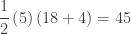
Draw the trapezoid representing the area between the graph of y=2x and the x-axis on the interval [2,7] and find its area =  \displaystyle \frac{1}{2}\left( 5 \right)\left( {18+4} \right)=45
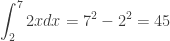
Then ask, “Does anyone know of a function whose derivative is 2x?” Let them think for a minute and someone will say, “Yeah, it’s {{x}^{2}}”  And then show them

\displaystyle \int_{2}^{7}{{2xdx}}={{7}^{2}}-{{2}^{2}}=45

Then go for a harder one:  \displaystyle \int_{0}^{{\frac{\pi }{2}}}{{\cos \left( x \right)dx}}

“Does anyone know a function whose derivative is \cos \left( x \right)?”

“Why yes, it’s \sin \left( x \right)

So, \displaystyle \int_{0}^{{\frac{\pi }{2}}}{{\cos \left( x \right)dx}}=\sin \left( {\frac{\pi }{2}} \right)-\sin \left( 0 \right)=1-0=1

That was easy!

If you want to challenge them and review some functions of the “special angles” try this one:

\displaystyle \int_{{\frac{\pi }{6}}}^{{\frac{{4\pi }}{3}}}{{\cos \left( x \right)dx}}=\sin \left( {\frac{{4\pi }}{3}} \right)-\sin \left( {\frac{\pi }{6}} \right)=\frac{{\sqrt{3}}}{2}-\frac{1}{2}

Tie the two parts together: Look at the graph of y=\sin \left( x \right). How much does it change from 0 to \frac{\pi }{2}? How much does it change from \frac{\pi }{6} to \frac{{4\pi }}{3}?

Sum up, by looking ahead:

  1. “The function whose derivative is …” is called the antiderivative.
  2. Using antiderivatives to evaluate definite integrals is easy; the hard part is finding the antiderivatives, since they are not all as straightforward as the two examples above. So, next we need to spend a few weeks learning how to find antiderivatives.[1]
  3. Given a derivative, finding its antiderivative is also the start of solving differential equations. This, too, will soon be a concern in the course.

[1] As I’ve written before, this is where it seems logical place to teach antiderivatives. Now students have a reason to find them. Teaching antidifferentiation after differentiation, before integration, seems like an intellectual exercise. Sure, it’s fun, but now we have a need for it.


Applications of Integration – Area & Average Value

Usually the first application of integration is to find the area bounded by a function and the x-axis, followed by finding the area between two functions. We begin with these problems

First some calculator hints

Graphing Integrals using a graphing calculator to graph functions defined by integrals

Graphing Calculator Use  and Definition Integrals – Exam considerations Suggestions for using a calculator efficiently in area/volume problems

Area Problems

Area Between Curves

Under is a Long Way Down How to avoid “negative area.”

Density Functions Not often asked on the AP exams, but a good application related to area, nevertheless.

Who’d a thunk it? Some more complicated area problems for CAS solution.

Improper Integrals and Proper Areas – a BC topic

Average Value

Average Value of a Function

What’s a Mean Old Average Anyway – Discusses the different “average” in calculus

Half-full and Half Empty – Average Value

Average Value Activity to help students discover the Average Value formula


Revised and updated October 22, 2018


Riemann Sums – the Theory

The series of post leads up to the Fundamental theorem of Calculus (FTC). Obviously, a very important destination.

  1. Working Towards Riemann Sums
  2. Definition of the Definite Integral and the FTC – a more exact demonstration from last Friday’s post and The Fundamental Theorem of Calculus –  an older demonstration
  3. More about the FTC The derivative of a function defined by an integral – the other half of the FTC.
  4. Good Question 11 Riemann Reversed – How to find the integral, given the Riemann sum. A problem that appears on the AP Calculus exams and can be confusing for students, at first.
  5. Properties of Integrals
  6. Variation on a Theme – 2 Comparing Riemann sums
  7. Trapezoids – Ancient and Modern – some history.


Revised and updated October 22, 2018


Getting Ready to Integrate

Behind every definite integral is a Riemann sums. Students need to know about Riemann sums so that they can understand definite integrals (a shorthand notation for the limit if a Riemann sum) and the Fundamental theorem of Calculus. Theses posts help prepare students for Riemann sums.

Integration Itinerary  Some thoughts on the order of topics in your integration unit.

Some preliminary posts leading up to Riemann sums

  1. The Old Pump Where I start Integration
  2. Flying into Integrationland Continues the investigation in the Old Pump – the airplane problem
  3. Jobs, Jobs, Jobs Integration in real life.
  4. Working Towards Riemann Sums (12-10-2012)

While I prefer to teach antidifferentiation after students have learned about the Fundamental Theorem of Calculus, others prefer to discuss antidifferentiation firsts and the topic often precedes Riemann sums in textbooks. (See Integration Itinerary )  If you are among those, here are posts on antidifferentiation. If you teach this topic later, save this post for then.

ANTIDIFFERENTIATION

Antidifferentiation  (11-28-2012)

Why Muss with the “+C”? But still don’t forget it.

Arbitrary Ranges (2-9-2014) Integrating inverse trigonometric functions.

ANTIDIFFERENTIATION BY PARTS This is a BC topic, or you could use it after the exam in an AB course.

Integration by Parts 1 (2-2-2013) Basics

Integration by Parts 2 (2-4-2013) The Tabular Method

Modified Tabular Integration (7-24-2013) A quicker way

Parts and More Parts (8-5-2016) Reduction formulas (Not tested on the AP Calculus exams)

Good Question 12 – Parts with a Constant (12-13-2016) How come you don’t need the “+C”?


Integration

Integration – DON’T PANIC

As I’ve mentioned before, I try to stay a few weeks ahead of where I figure you are in the curriculum. So here. early in November, I start with integration. You probably don’t start integration until after Thanksgiving in early December. That’s about the midpoint of the year. Don’t wait too much longer. True, your kids are not differentiation experts (yet); there will be plenty of differentiation work while your teaching and learning integration. Spending too much time on differentiation will give you less time for integration and there is as much integration on the test as differentiation.

The first thing to decide is when to teach antidifferentiation (finding the function whose derivative you are given). Many books do this at the end of the last differentiation chapter or the first thing in the first integration chapter. Some teachers, myself included, prefer to wait until after presenting the Fundamental Theorem of Calculus (FTC). Still others wait until after teaching all the applications. The reasons  for this are discussed in more detail in the first post below, Integration Itinerary.

Integration itinerary – a discussion of when to teach antidifferentiation.

The following posts are on different antidifferentiation techniques.

Antidifferentiation u-substitution

Why Muss with the “+C”?

Good Question 12 – Parts with a Constant?

Arbitrary Ranges  Integrating inverse trigonometric functions.

Integration by Parts I (BC only)

Good Question 12 – Parts with a Constant  How come you don’t need the “+C”?

The next three posts discuss the tabular method in more detail. This is used when integration by parts must be used more than once. If memory serves, using integration by parts twice on the same function has never shown up on the AP exams. Just sayin’.

Integration by Parts II (BC only) The Tabular method.

Parts and More Parts   (BC only) More on the tabular method and on reduction formulas

Modified Tabular Integration  (BC only) With this you don’t need to make a table; it’s quicker than the tabular method and just as easy.


Revised and updated November 4, 2018

Summer Fun

Every Spring I have a lot of fun proofreading Audrey Weeks’ new Calculus in Motion illustrations for the most recent AP Calculus Exam questions. These illustrations run on Geometers’ Sketchpad. In addition to the exam questions Calculus in Motion (and its companion Algebra in Motion) include separate animations illustrating most of the concepts in calculus and algebra. This is a great resource for your classes.

The proofreading and the cross-country conversations with Audrey give me a chance to learn more about the questions.

This year, I really got into 2018 AB 6, the differential equation question. I wrote an exploration (or as the kids would say “worksheet”) on a function very similar to the differential equation in that question. The exploration, which is rather long, includes these topics:

  • Finding the general solution of the differential equation by separating the variables
  • Checking the solution by substitution
  • Using a graphing utility to explore the solutions for all values of the constant of integration, C
  • Finding the solutions’ horizontal and vertical asymptotes
  • Finding several particular solutions
  • Finding the domains of the particular solutions
  • Finding the extreme value of all solutions in terms of C
  • Finding the second derivative (implicit differentiation)
  • Considering concavity
  • Investigating a special case or two

I also hope that in working through this exploration students will learn not so much about this particular function, but how to use the tools of algebra, calculus, and technology to fully investigate any function and to find all its foibles.

Students will need to have studied calculus through differential equations before they start the exploration. I will repost it next January for them.

The exploration is here for you to try. Try it before you look at the solutions. It will give you something to do over the summer – well not all summer, only an hour or so.

As always, I appreciate your feedback and comments. Please share them with me using the reply box below.


There will be only occasional, very occasional, posts over the Summer. More regular posting will begin again in August. Enjoy the Explorations, and, more important, enjoy the Summer!

.