Linear Motion (Type 2)

“A particle (or car, or bicycle) moves on a number line ….”

These questions may give the position equation, the velocity equation or the acceleration equation of something that is moving, along with an initial condition. The questions ask for information about motion of the particle: its direction, when it changes direction, its maximum position in one direction (farthest left or right), its speed, etc.

The particle may be a “particle,” a person, car, a rocket, etc.  Particles don’t really move in this way, so the equation or graph should be considered to be a model. The question is a versatile way to test a variety of calculus concepts since the position, velocity, or acceleration may be given as an equation, a graph, or a table; be sure to use examples of all three forms during the review.

Many of the concepts related to motion problems are the same as those related to function and graph analysis (Type 3). Stress the similarities and show students how the same concepts go by different names. For example, finding when a particle is “farthest right” is the same as finding the when a function reaches its “absolute maximum value.” See my post for November 16, 2012 for a list of these corresponding terms.

The position, s(t), is a function of time. The relationships are

  • The velocity is the derivative of the position, {s}'\left( t \right)=v\left( t \right). Velocity is has direction (indicated by its sign) and magnitude. Technically, velocity is a vector; the term “vector” will not appear on the AB exam.
  • Speed is the absolute value of velocity; it is a number, not a vector. See my post for November 19, 2012.
  • Acceleration is the derivative of velocity and the second derivative of position, \displaystyle a\left( t \right)={v}'\left( t \right)={{s}'}'\left( t \right). It, too, has direction and magnitude and is a vector.
  • Velocity is the antiderivative of the acceleration
  • Position is the antiderivative of velocity.

What students should be able to do:

  • Understand and use the relationships above.
  • Distinguish between position at some time and the total distance traveled during the time period.
  • The total distance traveled is the definite integral of the speed \displaystyle \int_{a}^{b}{\left| v\left( t \right) \right|}\,dt.
  • The net distance traveled, displacement, is the definite integral of the velocity (rate of change): \displaystyle \int_{a}^{b}{v\left( t \right)}\,dt. Note that “displacement” has not been used preciously on AP exam, but (as per the new Course and Exam Description) may be used now. Be sure your students know this term.
  • The final position is the initial position plus the definite integral of the rate of change from xa to x = t: \displaystyle s\left( t \right)=s\left( a \right)+\int_{a}^{t}{v\left( x \right)}\,dx Notice that this is an accumulation function equation (Type 1).
  • Initial value differential equation problems: given the velocity or acceleration with initial condition(s) find the position or velocity. These are easily handled with the accumulation equation in the bullet above.
  • Find the speed at a given time. The speed is the absolute value of the velocity.
  • Find average speed, velocity, or acceleration
  • Determine if the speed is increasing or decreasing.
  • If at some time, the velocity and acceleration have the same sign then the speed is increasing.If they have different signs the speed is decreasing.
  • If the velocity graph is moving away from (towards) the t-axis the speed is increasing (decreasing).
  • See my post for November 19, 2012.
  • Use a difference quotient to approximate derivative.
  • Riemann sum approximations.
  • Units of measure.
  • Interpret meaning of a derivative or a definite integral in context of the problem

Shorter questions on this concept appear in the multiple-choice sections. As always, look over as many questions of this kind from past exams as you can find.

For some previous posts on this subject see November 1619, 2012, January 21, 2013. There is also a worksheet on speed here and on the Resources pages (click at the top of this page).

The BC topic of motion in a plane, (Type 8: parametric equations and vectors) will be discussed in a later post.


Next Posts:

Friday March 10: Graph Analysis (Type 3)

Tuesday March 14: Area and Volume (Type 4)

Friday March 17: Table and Riemann sums (Type 5)

Tuesday Match 21: Differential Equations (Type 6)

Friday March 24: Others (Type 7: related rates, implicit differentiation, etc.)


Rate and Accumulation Questions (Type 1)

The Free-response Questions

The free-response questions fall into 10 general categories or types. The multiple-choice questions fall largely into the same categories plus some straight-forward questions asking students to find limits, derivatives, and integrals. Often two or more type are combined into one question. The types are the following.

  1. Rate and Accumulation
  2. Linear motion
  3. Graph Analysis
  4. Area / Volume
  5. Table and Riemann sum
  6. Differential Equation (and slope fields)
  7. Others (implicit differentiation, related rates, theorems, et. al.)
  8. Parametric Equations (BC only)
  9. Polar Equations (BC only)
  10. Sequences and Series (BC only)

My numbering has changed over the years. This numbering follows this index where each type is referenced to free-response and multiple-choice questions of the same type.

I will discuss each type individually over the next few weeks starting today with Type 1.


AP Type Questions 1: Rate and Accumulation

These questions are often in context with a lot of words describing a situation in which some things are changing. There are usually two rates acting in opposite ways. Students are asked about the change that the rates produce over some time interval either separately or together.

The rates are often fairly complicated functions. If they are on the calculator allowed section, students should store the functions in the equation editor of their calculator and use their calculator to do any integration or differentiation that may be necessary.

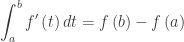
The main idea is that integral of a rate of change over the time interval [a, b] is the net amount of change

\displaystyle \int_{a}^{b}{{f}'\left( t \right)dt}=f\left( b \right)-f\left( a \right)

If the question asks for an amount, look around for a rate to integrate.

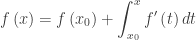
The final (accumulated) amount is the initial amount plus the accumulated change:

\displaystyle f\left( x \right)=f\left( {{x}_{0}} \right)+\int_{{{x}_{0}}}^{x}{{f}'\left( t \right)}\,dt,

where {{x}_{0}} is the initial time, and  f\left( {{x}_{0}} \right) is the initial amount. Since this is one of the main interpretations of the definite integral the concept may come up in a variety of situations.

What students should be able to do:

  • Be ready to read and apply; often these problems contain a lot of writing which needs to be carefully read.
  • Recognize that rate = derivative.
  • Recognize a rate from the units given without the words “rate” or “derivative.”
  • Find the change in an amount by integrating the rate. The integral of a rate of change gives the amount of change (FTC):

\displaystyle \int_{a}^{b}{{f}'\left( t \right)dt}=f\left( b \right)-f\left( a \right).

  • Find the final amount by adding the initial amount to the amount found by integrating the rate. If x={{x}_{0}} is the initial time, and f\left( {{x}_{0}} \right)  is the initial amount, then final accumulated amount is

\displaystyle f\left( x \right)=f\left( {{x}_{0}} \right)+\int_{{{x}_{0}}}^{x}{{f}'\left( t \right)}\,dt,

  • Understand the question. It is often not necessary to as much computation as it seems at first.
  • Use FTC to differentiate a function defined by an integral.
  • Explain the meaning of a derivative or its value in terms of the context of the problem.
  • Explain the meaning of a definite integral or its value in terms of the context of the problem. The explanation should contain (1) what it represents, (2) its units, and (3) how the limits of integration apply in context.
  • Store functions in their calculator recall them to do computations on their calculator.
  • If the rates are given in a table, be ready to approximate an integral using a Riemann sum or by trapezoids.
  • Do a max/min or increasing/decreasing analysis.

Shorter questions on this concept appear in the multiple-choice sections. As always, look over as many questions of this kind from past exams as you can find.


For some previous posts on this subject see January 2123, 2013. This post is revised from the post of March 1, 2013


Next Posts:

Tuesday March 7: Type 2 Linear Motion

Friday March 10: Type 3: Graph Analysis


The Writing Questions on the AP Exams

The goals of the AP Calculus program state that, “Students should be able to communicate mathematics and explain solutions to problems both verbally and in well written sentences.” For obvious reasons the verbal part cannot be tested on the exams; it is expected that you will do that in your class. The exams do require written answers to parts of several questions. The number of points riding on written explanations on recent exams is summarized in the table below.

 Year AB BC
2007 9 9
2008 7 8
2009 7 3
2010 7 7
2011 7 6
2012 9 7
2013 9 7
2014 6 3
2015 8 6
2016 6 6

The average is between 6 and 8 points each year with some years having 9. That’s the equivalent of a full question. So, this is something that should not be overlooked in teaching the course and in preparing for the exams. Start long before calculus; make writing part of the school’s math program.

That a written answer is expected is indicated by phrases such as:

  • Justify you answer
  • Explain your reasoning
  • Why?
  • Why not?
  • Give a reason for your answer
  • Explain the meaning of a definite integral in the context of the problem.
  • Explain the meaning of a derivative in the context of the problem.
  • Explain why an approximation overestimates or underestimates the actual value

How do you answer such a question? The short answer is to determine which theorem or definition applies and then show that the given situation specifically meets (or fails to meet) the hypotheses of the theorem or definition.

Explanations should be based on what is given in the problem or what the student has computed or derived from the given, and be based on a theorem or definition. Some more specific suggestions:

  • To show that a function is continuous show that the limit (or perhaps two one-sided limits) equals the value at the point. (See 2007 AB 6)
  • Increasing, decreasing, local extreme values, and concavity are all justified by reference to the function’s derivative. The table below shows what is required for the justifications. The items in the second column must be given (perhaps on a graph of the derivative) or must have been established by the student’s work.
Conclusion Establish that
y is increasing y’ > 0  (above the x-axis)
y is decreasing y’ < 0   (below the x-axis)
y has a local minimum y’ changes  – to + (crosses x-axis below to above) or {y}'=0\text{ and }{{y}'}'>0
y has a local maximum y’ changes + to –  (crosses x-axis above to below) or {y}'=0\text{ and }{{y}'}'<0
y is concave up y’ increasing  (going up to the right) or {{y}'}'>0
y is concave down y’ decreasing  (going down to the right) or {{y}'}'<0
y has point of inflection y’ extreme value  (high or low points) or {{y}'}' changes sign.
  •  Local extreme values may be justified by the First Derivative Test, the Second Derivative Test, or the Candidates’ Test. In each case the hypotheses must be shown to be true either in the given or by the student’s work.
  • Absolute Extreme Values may be justified by the same three tests (often the Candidates’ Test is the easiest), but here the student must consider the entire domain. This may be done (for a continuous function) by saying specifically that this is the only place where the derivative changes sign in the proper direction. (See the “quiz” below.)
  • Speed is increasing on intervals where the velocity and acceleration have the same sign; decreasing where they have different signs. (2013 AB 2 d)
  • To use the Mean Value Theorem state that the function is continuous and differentiable on the interval and show the computation of the slope between the endpoints of the interval. (2007 AB 3 b, 2103 AB3/BC3)
  • To use the Intermediate Value Theorem state that the function is continuous and show that the values at the endpoints bracket the value in question (2007 AB 3 a)
  • For L’Hôpital’s Rule state that the limit of the numerator and denominator are either both zero or both infinite. (2013 BC 5 a)
  • The meaning of a derivative should include the value and (1) what it is (the rate of change of …, velocity of …, slope of …), (2) the time it obtains this value, and (3) the units. (2012 AB1/BC1)
  • The meaning of a definite integral should include the value and (1) what the integral gives (amount, average value, change of position), (2) the units, and (3) what the limits of integration mean. One way of determining this is to remember the Fundamental Theorem of Calculus \displaystyle \int_{a}^{b}{{f}'\left( x \right)dx}=f\left( b \right)-f\left( a \right). The integral is the difference between whatever f represents at b and what it represents at a. (2009 AB 2 c, AB 3c, 2013 AB3/BC3 c)
  • To show that a theorem applies state and show that all its hypotheses are met. To show that a theorem does not apply show that at least one of the hypotheses is not true (be specific as to which one).
  • Overestimates or underestimates usually depend on the concavity between the two points used in the estimates.

A few other things to keep on mind:

  • Avoid pronouns. Pronouns need antecedents. “It’s increasing because it is positive on the interval” is not going to earn any points.
  • Avoid ambiguous references. Phrases such as “the graph”, “the derivative”, or “the slope” are unclear. When they see “the graph” readers are taught to ask “the graph of what?” Do not make them guess. Instead say “the graph of the derivative”, “the derivative of f”, or “the slope of the derivative.”
  • Answer the question. If the question is a yes or no then say “yes” or “no.” Every year students write great explanations but never clearly say whether they are justifying a “yes” or a “no.”
  • Don’t write too much. Usually a sentence or two is enough. If something extra is in the explanation and it is wrong, then the credit is not earned even though the rest of the explanation is great.

As always, look at the scoring standards from past exam and see how the justifications and explanations are worded. These make good templates for common justifications. Keep in mind that there are other correct ways to write the justifications.


QUIZ

Here is a quiz that can help your students learn how to write good explanations.

Let f\left( x \right)={{e}^{x}}\left( x-3 \right) for 0\le x\le 5.

Find the location of the minimum value of f(x). Justify your answer three different ways (without reference to each other).

Don’t tell your students the three ways – they should know that!

The minimum value occurs at x = 2. The three ways to justify this are the First Derivative Test, the Second Derivative Test and the Candidates’ Test (aka: the Closed Interval Test). Let them discuss and constructively criticize each other’s answers. As a class, compare and contrast the students’ answers.


Next Posts:

Friday March 3: Type 1 of the 10 type questions: Rate and Accumulation

Tuesday March 7: Type 2 Linear Motion

Friday March 10: Type 3: Graph Analysis


Revised from a post of March 9, 2015.

Resources for Reviewing

Here are several resources that will help you get started with your review

  • Released free-response questions from the College Board. AB and BC.
  • Released multiple-choice questions.
    • 2012 from the College Board are here for AB and here for BC FREE (.PDF)
    • 2008 AB and BC  College Board store cost $30.00 Paper (Search on-line and you should be able to find a copy, but so can your students.)
    • 2003 AB and BC College Board store cost $42.00 Paper (Search on-line and you should be able to find a copy, but so can your students.)
    • 1998  AB Exam Free (.PDF)
    • The 2013 – 2016 Secure Exams are available at your audit website.
  • Type Analysis 2018 by the 10 type questions that will be discussed in later posts. (by. Lin McMullin)
  • The  AB Directions and BC Directions. Yes, this is boiler plate stuff, but take a few minutes to go over it with your students. They should not have to see the directions for the first time on the day of the exam.The free-response instruction have changed slightly from previous years. The change is not a policy change, but rather made to emphasize certain things that students should be doing. For more on the changes see NCTM Calculus Panel Notes.
  • Calculator Skills needed on the AP Exams – share this information with your students, if you have not already done so. There are only about 12 -15 points on the entire exam which require a calculator. A calculator alone will not get anyone a 5 (or even a 2). Nevertheless, the points are there and usually pretty easy to earn. The real reason calculators and other technology are so important is that when used throughout the year, they help students better understand the calculus.

The next posts:

Friday February 24: Using Practice Exams

Tuesday February 28: The Writing Questions on the AP Exams

Friday March 3: Type 1 of the 10 type questions: Rate and Accumulation

Tuesday March 7: Type 2 Linear Motion


Revised 4-17-17


AP Exam Review

Don’t panic! It is not time to start reviewing.

I try to keep these posts ahead of the typical AP Calculus timeline so you can have time to think them over and include what you want to use from them (if anything).

Over the next 6 weeks I will post several times each week. The post will be previous posts on reviewing slightly revised and updated. Today’s post is “Ideas for reviewing for the AP Exam” originally posted on February 25, 2013.

Ideas for reviewing for the AP Exam

Part of the purpose of reviewing for the AP calculus exams is to refresh your students’ memory on all the great things you’ve taught them during the rear. The other purpose is to inform them about the format of the exam, the style of the questions, the way they should present their answer, and how the exam is graded and scored.

Using AP questions all year is a good way to accomplish some of this. Look through the released multiple-choice exams and pick questions related to whatever you are doing at the moment. Free-response questions are a little trickier since the parts of the questions come from different units. These may be adapted or used in part.

At the end of the year I suggest you review the free-response questions by type – table questions, differential equations, area/volume, rate/accumulation, graph, etc. That is, plan to spend a few days doing a selection of questions of one type so that student can see how that type question can be used to test a variety of topics. Then go onto the next type. Many teachers keep a collection of past free-response questions filed by type rather than year. This makes it easy to study them by type.

In the next few posts I will discuss each type (there are 10) in turn and give suggestions about what to look for and how to approach the question.

Simulated Exam

Plan to give a simulated (mock) exam. Each year the College Board makes a full exam available. The exams for 1998, 2003, 2008, and 2012 are available at AP Central  and the secure 2013 – 2016 exams are available through your audit website. If possible, find a time when your students can take the exam in 3.25 hours. Teachers often do this on a weekend day or in the evening. This will give your students a feel for what it is like to work calculus problems under test conditions. If you cannot get 3.25 hours to do this give the sections in class using the prescribed time. Some teachers schedule several simulated exams. Of course, you need to correct them and go over the most common mistakes.

Explain the scoring

There are 108 points available on the exam; each half is worth the same – 54 points. The number of points required for each score is set after the exams are graded.

For the AB exam, the points required for each score out of 108 point are, very approximately:

  • for a 5 – 69 points,
  • for a 4 – 52 points,
  • for a 3 – 40 points,
  • for a 2 – 28 points.

The numbers are similar for the BC exams are again very approximately:

  • for a 5 – 68 points,
  • for a 4 – 58 points,
  • for a 3 – 42 points,
  • for a 2 – 34 points.

The actual numbers are not what is important. What is important is that students to know is that they can omit or get wrong many questions and still earn a good score. Students may not be used to this (since they skip or get so few questions wrong on your tests!). They should not panic or feel they are doing poorly if they miss a number of questions. If they understand and accept this in advance they will calm down and do better on the exams. Help them understand they should gather as many points as they can, and not be too concerned if they cannot get them all. Doing only the first 2 parts of a free-response question will probably put them at the mean for that question. Remind them not to spend time on something that’s not working out, or that they don’t feel they know how to do.

Directions

Print a copy of the directions for both parts of the exam and go over them with your students. Especially, for the free-response questions explain the need to show their work, explain that they do not have to simplify arithmetic or algebraic expressions, and explain the three-decimal place consideration. Be sure they know what is expected of them.The directions are here: AB Directions and BC Directions. Yes, this is boiler plate stuff, but take a few minutes to go over it with your students. They should not have to see the directions for the first time on the day of the exam.


Next Posts:

Thursday February 23, 2017: A list of resources for you and your students in preparation for the exams.

Friday February 24: Using Practice Exams

Tuesday February 28: The Writing Questions on the AP Exams

Friday March 3: Type 1 of the 10 type questions: Rate and Accumulation

Tuesday March 7: Type 2 Linear Motion


The Logistic Equation

After my last post, I realized I have never written about the logistic growth model. This is a topic tested on the AP Calculus BC exam (and not on AB). Here is a brief outline of this topic.

Logistic growth occurs in situations where the rate of change of a population, y, is proportional to the product of the number present at any time, y¸ and the difference between the number present and a number, C > 0, called the carrying capacity.

As explained in my last post, some factor limits the overall population possible to an amount C. Ask your students to sketch what they think the graph of such a function may look like and explain why.

The population starts by growing rapidly and then slows down as it approaches C. For example, if a small population of rabbits is placed on an island, the population will grow rapidly until the food starts to run out. The population will eventually level off and not grow greater than there is food to support it.

In symbols, logistic growth is modeled by the differential equation

\displaystyle \frac{dy}{dt}=ky\left( C-y \right) , where k > 0 is the constant of proportionality, or by

\displaystyle \frac{dy}{dt}=Ky\left( 1-\frac{y}{C} \right) and K=Ck

The differential equation is solved using separation of variables followed by using the method of partial fraction to obtain two expressions that can be integrated. The actual solving of the differential equation has never been tested, nor has memorization of the solution. What has been tested is what the solution graph looks like and how those features apply in real situations.

The solution, which need NOT be memorized, is \displaystyle f\left( x \right)=\frac{C{{e}^{kCx}}}{{{e}^{kCx}}+kcD} (D is the constant of integration formally known as “+C.”)

The important features of the graph of the function can be found by examining the differential equation. This is an exercise consistent with MPAC 4: Connecting multiple representations and MPAC 5: Building notational fluency.

logisitc-de

The figure above shows the slope field for a typical logistic differential equation. The values of y where \frac{dy}{dt}=0 indicate the location of a horizontal asymptote. There are horizontal asymptotes at y = 0 and y = C.

For points between the asymptotes 0<y<C, all the factors of the differential equation are positive. This indicates that the function is increasing. Near y = 0 and y = C one factor or the other is small, approaching 0: the graph of the solution (heavy blue line) is leveling off and approaching y = C from below as an asymptote. If the graph is extended into the second quadrant (thin blue line), it approaches the x-axis from above as an asymptote.

If the initial condition is greater than C then the (C – y) factor is negative, and the solution function is decreasing and approaching the asymptote y = C from above. If the number of rabbits put on the island is more than the carrying capacity, the population decreases (the poor rabbits starve).

The differential equation is a quadratic in y. Moving from the initial condition to right the slope of the tangent lines are positive and increasing, so the solution’s graph is concave upwards. After y=\tfrac{1}{2}C the values of the slope (differential equation) remain positive but decrease indicating that the graph is now increasing and concave down. After this point the two factors of the differential equation switch values; that is, moving the same distance left and right of this point the product will be the same, but the values of each factor will have switched. Thus, the point where y=\tfrac{1}{2}C is not only a point of inflection, but also a point of symmetry of the graph.

The maximum value occurs of the first derivative (the differential equation) is at y=\tfrac{1}{2}C. This can be determined from the properties of a quadratic expression or from the second derivative,

\displaystyle \frac{{{d}^{2}}y}{d{{t}^{2}}}=k\left( y\left( -1 \right)+\left( C-y \right)\left( 1 \right) \right)\cdot \frac{dy}{dt}=k\left( C-2y \right)\frac{dy}{dt}.

The second derivative is 0 at y=\tfrac{1}{2}C. This is a point of inflection, the place where the function is increasing most rapidly.

Here is a Desmos demonstration that can be used to investigate the logistic differential equation, its slope field, and solution.


These ideas have all been tested on various BC exams. I cannot quote the questions here, but you may look them up for yourself.

Free-response:

2004 BC 5: (a) asymptotes as limits, and (b) when is the population growing fastest.

2008 BC 6: (a) sketch logistic equation on given slope field for two initial conditions – one between the asymptotes and one above the carrying capacity

Multiple-choice:

2003 BC 21: asymptote as a limit

2008 AB 22: Even though not an AB topic, the translation from words to symbols of the logistic model was tested on the 2008 AB multiple-choice exam. The idea was the translating, not knowledge of the logistic model.

2008 BC 24 given graph, identify differential equation.

2012 BC 14 identify logistic differential equation

There are also logistic questions on the restricted multiple-choice BC exams from 2013, 2014, and 2016; you’ll have to find them for yourself.


If you would like to experiment with logistic equations try graphing using Winplot for PC, Winplot for MACs, Geogebra, or some other program that will graph slope fields and solutions and has sliders. Desmos does not currently graph slope fields, but the solution graph can be produced.

For the differential equation enter \frac{dy}{dx}=ky\left( C-y \right) with sliders for k and C.

If you just want to look at the solution, use any grapher with sliders. The solution can be graphed as \displaystyle f\left( x \right)=\frac{C{{e}^{kCx}}}{{{e}^{kCx}}+kcD} with D, the constant of integration, added as a third slider.

Revised and Desmos Demo link added May 12, 2022

Definite integrals – Exam Considerations

The sixth in the Graphing Calculator / Technology Series

Both graphing calculators and CAS calculators allow students to evaluate definite integrals. In the sections of the AP Calculus that allow calculator use students are expected to use their calculator to evaluate definite integrals. On the free-response section, students should write the integral on their paper, including the limits of integration, and then find its value on their calculator. There is no need to show the antiderivative; in fact, the antiderivative may be too difficult to find.

There are a few things students should be aware of. A question typically is worth three points: one point for the limits of integration and any constant (such as \pi in a volume problem), one point for the integrand, and one point for the numerical answer. An answer alone, with no integral, may not earn any points even if it is correct.

The “Instructions” on the cover of the free-response sections read “Show your work. … Your work will be scored on the correctness and completeness of your methods as well as your answers. Answers without supporting work will usually not receive credit.” [Emphasis added] The work must be on the paper, not just on the calculator.

Another consideration is accuracy. The general directions also say, “If you use decimal approximations in calculations, your work will be scored on accuracy. Unless otherwise specified, your final answers should be accurate to three places after the decimal point.”

Let’s see how all this works in an example.

Find the area of the region between the graphs of f\left( x \right)=x+3\cos (x) and g\left( x \right)={{\left( x-2 \right)}^{2}}. Begin by graphing the functions and finding their points of intersections on your graphing calculator.

integrals-3

The values are A = 0.22532 and B = 2.41524 (or 2.41525). Students should also store these values in their calculator and recall them for the computation, as explained in a previous post. Students should write these on their paper just as shown here. Notice that a few extra decimal places should be included.  The student should then show the integral and limits along with the answer on their paper:

\displaystyle \int_{A}^{B}{\left( x-3\cos \left( x \right)-{{\left( x-2 \right)}^{2}} \right)dx=2.32651}

Notice: Students may write A and B as the limits of integration, provided they have stated their values on the paper. This is best, but they may also write:

\displaystyle \int_{0.22532}^{2.41525}{\left( x-3\cos \left( x \right)-{{\left( x-2 \right)}^{2}} \right)dx=2.32651}

or even \displaystyle  \int_{0.225}^{2,415}{\left( x-3\cos \left( x \right)-{{\left( x-2 \right)}^{2}} \right)dx=2.32651}

But be careful!!! The unrounded values should be used to do the computation. Since the limits are answers they may be rounded, but if the rounding causes the final answer to not be accurate to three places past the decimal point, then the final answer is wrong, and the answer point will not be awarded. This has happened in the past. The safest thing is to use 5 or more decimal places in your computations.

Notice also that the final answer need not be rounded as long as the first three decimal places are correct.

.