Seeing the Chain Rule

Being a believer in the Rule of Four, I have been trying for years to find a good visual (graphical) illustration of why or how the Chain Rule for derivatives works. This very simple example is the best I could come up with.

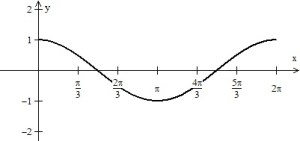
Consider the function y=\sin \left( x \right),0\le x\le 2\pi . (See figure 1. A tangent segment at \displaystyle \left( {\frac{\pi }{3},\sin \left( {\frac{\pi }{3}} \right)} \right) is drawn.) As you know, this function’s values go smoothly from 0 to 1 to 0 to –1 and back to 0. The slopes of its tangent line, its derivative, appears to go from 1 to 0 to –1 to 0 to 1 as you would expect knowing its derivative is  \frac{{dy}}{{dx}}=\cos \left( x \right). (See figure 2)

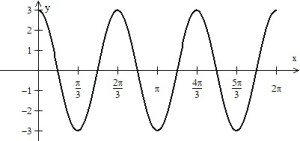
Consider the function  y=\sin \left( {3x} \right),0\le x\le 2\pi (See figure 3. A tangent line at \displaystyle \left( {\frac{\pi }{9},\sin \left( {\frac{\pi }{9}} \right)} \right)  is drawn) This takes on all the values of the sine function three times between 0 and  2\pi . It goes through the same values three times as fast and therefore, its rate of change (yeah, the derivative) should be three times as much. Compare the tangent lines in Figures 1 and 3. This agrees with the derivative found by the Chain Rule:  \frac{{dy}}{{dx}}=3\cos \left( {3x} \right). See figure 4)

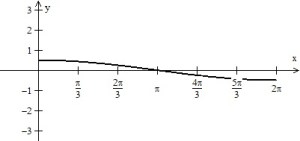
Next, consider the function y=\sin \left( {\tfrac{1}{2}x} \right),0\le x\le 2\pi (See figure 5. A tangent line at \displaystyle \left( {\frac{{2\pi }}{3},\sin \left( {\frac{{2\pi }}{3}} \right)} \right) is drawn.). This time the function is stretch and only goes through half its period. So, It goes through the same values half as fast as the original and the slope is only half as steep as the original. Compare the tangent lines in Figures 1 and 5.Therefore, the rate of change the derivative, should be only half the original’s. So,  \frac{{dy}}{{dx}}=\frac{1}{2}\cos \left( {\tfrac{1}{2}x} \right) (See figure 6)

I hope this helps your students see what’s happening with the Chain Rule, at least a little bit. I’d be happy to hear and share any ideas you have to illustrate the Chain Rule graphically.

There is a movable Desmos graph here to help illustrate all of this.


Here are links to other posts on the Chain Rule

Foreshadowing the Chain Rule

The Power Rule Implies Chain Rule

The Chain Rule

Derivative Practice – Numbers

Derivative Practice – Graphs

Experimenting with CAS – Chain Rule


2019 CED – Unit 3: Differentiation: Composite, Implicit, and Inverse Functions

Unit 3 covers the Chain Rule, differentiation techniques that follow from it, and higher order derivatives. (CED – 2019 p. 67 – 77). These topics account for about 9 – 13% of questions on the AB exam and 4 – 7% of the BC questions.

Topics 3.1 – 3.6

Topic 3.1 The Chain Rule. Students learn how to apply the Chain Rule in basic situations.

Topic 3.2 Implicit Differentiation. The Chain Rule is used to find the derivative of implicit relations.

Topic 3.3 Differentiation Inverse Functions.  The Chain Rule is used to differentiate inverse functions.

Topic 3.4 Differentiating Inverse Trigonometric Functions. Continuing the previous section, the ideas of the derivative of the inverse are applied to the inverse trigonometric functions.

Topic 3.5 Selecting Procedures for Calculating Derivatives. Students need to be able to choose which differentiation procedure should be used for any function they are given. This is where you can review (spiral) techniques from Unit 2 and practice those from this unit.

Topic 3.6 Calculating Higher Order Derivatives. Second and higher order derivatives are considered. Also, the notations for higher order derivatives are included here.


Topics 3.2, 3.4, and 3.5 will require more than one class period. You may want to do topic 3.6 before 3.5 and use 3.5 to practice all the differentiated techniques learned so far. The suggested number of 40 – 50-minute class periods is about 10 – 11 for AB and 8 – 9 for BC. This includes time for testing etc.
Posts on these topics include:

Foreshadowing the Chain Rule

The Power Rule Implies Chain Rule

The Chain Rule

           Seeing the Chain Rule

Derivative Practice – Numbers

Derivative Practice – Graphs

Experimenting with CAS – Chain Rule

Implicit Differentiation of Parametric Equations


This series of posts reviews and expands what students know from pre-calculus about inverses. This leads to finding the derivative of exponential functions, ax, and the definition of e, from which comes the definition of the natural logarithm.

Inverses Graphically and Numerically

The Range of the Inverse

The Calculus of Inverses

The Derivatives of Exponential Functions and the Definition of e and This pair of posts shows how to find the derivative of an exponential function, how and why e is chosen to help this differentiation.

Logarithms Inverses are used to define the natural logarithm function as the inverse of ex. This follow naturally from the work on inverses. However, integration is involved and this is best saved until later. I will mention it then.
Here are links to the full list of posts discussing the ten units in the 2019 Course and Exam Description.

2019 CED – Unit 1: Limits and Continuity

2019 CED – Unit 2: Differentiation: Definition and Fundamental Properties.

2019 CED – Unit 3: Differentiation: Composite , Implicit, and Inverse Functions

2019 CED – Unit 4 Contextual Applications of the Derivative  Consider teaching Unit 5 before Unit 4

2019 – CED Unit 5 Analytical Applications of Differentiation  Consider teaching Unit 5 before Unit 4

2019 – CED Unit 6 Integration and Accumulation of Change

2019 – CED Unit 7 Differential Equations  Consider teaching after Unit 8

2019 – CED Unit 8 Applications of Integration   Consider teaching after Unit 6, before Unit 7

2019 – CED Unit 9 Parametric Equations, Polar Coordinates, and Vector-Values Functions 

2019 CED Unit 10 Infinite Sequences and Series


Updated to include the series on inverses – July 7, 2020

Differentiability Implies Continuity

An important theorem concerning derivatives is this:

If a function f is differentiable at x = a, then f is continuous at x = a.

The proof begins with the identity that for all x\ne a

\displaystyle f\left( x \right)-f\left( a \right)=\left( {x-a} \right)\frac{{f\left( x \right)-f\left( a \right)}}{{x-a}}

\displaystyle \underset{{x\to a}}{\mathop{{\lim }}}\,\left( {f\left( x \right)-f\left( a \right)} \right)=\underset{{x\to a}}{\mathop{{\lim }}}\,\left( {\left( {x-a} \right)\frac{{f\left( x \right)-f\left( a \right)}}{{x-a}}} \right)=\underset{{x\to a}}{\mathop{{\lim }}}\,\left( {x-a} \right)\cdot \underset{{x\to a}}{\mathop{{\lim }}}\,\frac{{f\left( x \right)-f\left( a \right)}}{{x-a}}

\displaystyle \underset{{x\to a}}{\mathop{{\lim }}}\,\left( {f\left( x \right)-f\left( a \right)} \right)=0\cdot {f}'\left( a \right)=0

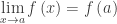
And therefore, \underset{{x\to a}}{\mathop{{\lim }}}\,f\left( x \right)=f\left( a \right)

Since both sides are finite, the function is continuous at x = a.


The converse of this theorem is false: A continuous function is not necessarily differentiable. A counterexample is the absolute value function which is continuous at the origin but not differentiable there. (The slope approaching from the left is not equal to the slope from the right.)

This is a theorem whose contrapositive is used as much as the theorem itself. The contrapositive is,

If a function is not continuous at a point, then it is not differentiable there.

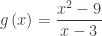
Example 1: A function such as  \displaystyle g\left( x \right)=\frac{{{{x}^{2}}-9}}{{x-3}} has a (removable) discontinuity at x = 3, but no value there.

So, in the limit definition of the derivative, \displaystyle \text{ }\!\!~\!\!\text{ }\underset{{h\to 0}}{\mathop{{\lim }}}\,\frac{{g\left( {3+h} \right)-g\left( 3 \right)}}{h} there is no value of g(3) to use, and the derivative does not exist.

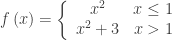
Example 2:  \displaystyle f\left( x \right)=\left\{ {\begin{array}{*{20}{c}} {{{x}^{2}}} & {x\le 1} \\ {{{x}^{2}}+3} & {x>1} \end{array}} \right.. This function has a jump discontinuity at x = 1.

Since the point (1, 1) is on the left part of the graph, if h > 0, f\left( {1+h} \right)-f\left( 1 \right)>3 and the limit  will always be a number greater than 3 divided by zero and will not exist. Therefore, even though the slopes from both side of x =1 approach the same value, namely 2, the derivative does not exist at x = 1.

This also applies to a situation like example 1 if f(3) were some value that did not fill in the hole in the graph.


On the AP Calculus exams students are often asked about the derivative of a function like those in the examples, and the lack of continuity should be an immediate clue that the derivative does not exist. See 2008 AB 6 (multiple-choice).

Just as important are questions in which the function is given as differentiable, but the student needs to know about continuity. Just remember: differentiability implies continuity. See 2013 AB 14 in which you must realize the since the function is given as differentiable at x = 1, it must be continuous there to solve the problem.


Continuity of the Derivative

A question that comes up is, if a function is differentiable is its derivative differentiable? The answer is no. While almost always the derivative is also differentiable, there is this counterexample:

\displaystyle f\left( x \right)=\left\{ {\begin{array}{*{20}{c}} {{{x}^{2}}\sin \left( {\frac{1}{x}} \right)} & {x\ne 0} \\ 0 & {x=0} \end{array}} \right.

The first line of the function has a removable oscillating discontinuity at x = 0, but since the \displaystyle {{x}^{2}} factor squeezes the function to the origin; the added condition that \displaystyle f\left( 0 \right)=0 makes the function continuous. Differentiating gives

\displaystyle {{f}^{'}}\left( x \right)={{x}^{2}}\cos \left( {\frac{1}{x}} \right)\left( {\frac{{-1}}{{{{x}^{2}}}}} \right)+2x\sin \left( {\frac{1}{x}} \right)=-\cos \left( {\frac{1}{x}} \right)+2x\sin \left( {\frac{1}{x}} \right)

And now there is no way to get around the oscillating discontinuity at x = 0.


2019 CED – Unit 2: Differentiation: Definition and Fundamental Properties.

Unit 2 contains topics rates of change, difference quotients, and the definition of the derivative (CED – 2019 p. 51 – 66). These topics account for about 10 – 12% of questions on the AB exam and 4 – 7% of the BC questions.

Topics 2.1 – 2.4: Introducing and Defining the Derivative 

Topic 2.1: Average and Instantaneous Rate of Change. The forward difference quotient is used to introduce the idea of rate of change over an interval and its limit as the length of the interval approaches zero is the instantaneous rate of change.

Topic 2.2: Defining the derivative and using derivative notation. The derivative is defined as the limit of the difference quotient from topic 1 and several new notations are introduced. The derivative is the slope of the tangent line at a point on the graph. Explain graphically, numerically, and analytically how the three representations relate to each other and the slope.

Topic 2.3 Estimating the derivative at a point.  Using tables and technology to approximate derivatives is used in this topic. The two resources in the sidebar will be helpful here.

Topic 2.4: Differentiability and Continuity. An important theorem is that differentiability implies continuity – everywhere a function is differentiable it is continuous.  Its converse is false – a function may be continuous at a point, but not differentiable there. A counterexample is the absolute value function, |x|, at x = 0.

One way that the definition of derivative is tested on recent exams which bothers some students is to ask a limit like

\displaystyle \underset{{x\to 0}}{\mathop{{\lim }}}\,\frac{{\tan \left( {\tfrac{\pi }{4}+x} \right)-\tan \left( {\tfrac{\pi }{4}} \right)}}{x}.

From the form of the limit students should realize this as the limit definition of the derivative. The h in the definition has been replaced by x. The function is tan(x) at the point where \displaystyle a=\tfrac{\pi }{4}. The limit is \displaystyle {{\sec }^{2}}\left( {\tfrac{\pi }{4}} \right)=2.

Topics 2.5 – 2.10: Differentiation Rules

The remaining topics in this chapter are the rules for calculating derivatives without using the definition. These rules should be memorized as students will be using them constantly. There will be additional rules in Unit 3 (Chain Rule, Implicit differentiation, higher order derivative) and for BC, Unit 9 (parametric and vector equations).

Topic 2.5: The Power Rule

Topic 2.6: Constant, sum, difference, and constant multiple rules

Topic 2.7: Derivatives of the cos(x), sin(x), ex, and ln(x). This is where you use the squeeze theorem.

Topic 2.8. The Product Rule

Topic 2.9: The Quotient Rule

Topic 2.10: Derivative of the other trigonometric functions

The rules can be tested directly by just asking for the derivative or its value at a point for a given function. Or they can be tested by requiring the students to use the rule of an general expression and then find the values from a table, or a graph. See 2019 AB 6(b)


The suggested number of 40 – 50 minute class periods is 13 – 14 for AB and 9 – 10  for BC. This includes time for testing etc. Topics 2.1, 2,2, and 2.3 kind of flow together, but are important enough that you should spend time on them so that students develop a good understanding of what a derivative is. Topics 2.5 thru 2.10 can be developed in 2 -3 days, but then time needs to be spent deciding which rule(s) to use and in practice using them. The sidebar resource in the CED on “Selecting Procedures for Derivative” may be helpful here.


Other post on these topics

DEFINITION OF THE DERIVATIVE

Local Linearity 1  The graphical manifestation of differentiability with pathological examples.

Local Linearity 2   Using local linearity to approximate the tangent line. A calculator exploration.

Discovering the Derivative   A graphing calculator exploration

The Derivative 1  Definition of the derivative

The Derivative 2   Calculators and difference quotients

Difference Quotients 1

Difference Quotients II

Tangents and Slopes

         Differentiability Implies Continuity

FINDING DERIVATIVES 

Why Radians?  Don’t do calculus without them

The Derivative Rules 1  Constants, sums and differences, powers.

The Derivative Rules 2  The Product rule

The Derivative Rules 3  The Quotient rule


Here are links to the full list of posts discussing the ten units in the 2019 Course and Exam Description.

2019 CED – Unit 1: Limits and Continuity

2019 CED – Unit 2: Differentiation: Definition and Fundamental Properties.

2019 CED – Unit 3: Differentiation: Composite , Implicit, and Inverse Functions

2019 CED – Unit 4 Contextual Applications of the Derivative  Consider teaching Unit 5 before Unit 4

2019 – CED Unit 5 Analytical Applications of Differentiation  Consider teaching Unit 5 before Unit 4

2019 – CED Unit 6 Integration and Accumulation of Change

2019 – CED Unit 7 Differential Equations  Consider teaching after Unit 8

2019 – CED Unit 8 Applications of Integration   Consider teaching after Unit 6, before Unit 7

2019 – CED Unit 9 Parametric Equations, Polar Coordinates, and Vector-Values Functions 

2019 CED Unit 10 Infinite Sequences and Series


Did He, or Didn’t He?

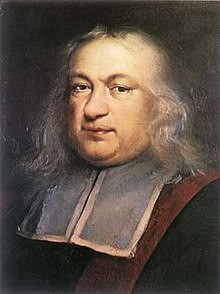
Pierre de Fermat (1607 – 1655)

Since it’s soon time to start derivatives, today we look at one way people found maximums and minimums before calculus was invented. Pierre de Fermat (1607 – 1655) was a French lawyer. His hobby, so to speak, was mathematics. He is considered one of the people who built the foundations of calculus. Along with Descartes, he did a lot of the early work on analytic geometry and did much work leading to calculus, which today we would consider calculus. Neither he nor other mathematicians of his time had the tool of limits to aid him. Derivatives were not yet invented. Nevertheless, he came awfully close to both.

Fermat was working on optimization and that required him to find the maximum or minimum values of functions. Here is how he found extreme values of polynomial functions. Even though he didn’t know limits and derivatives, maybe he used them.

Using Fermat’s method, and some modern notation and terminology, we will demonstrate has method by finding the extreme values of the function:

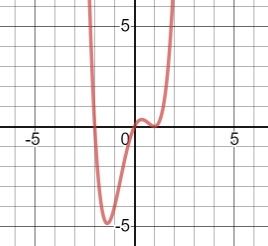
(1)          \displaystyle f\left( x \right)={{x}^{4}}-3{{x}^{2}}+2x               

Near an extreme value Fermat reasoned that a horizontal line would intersect the graph in two points, say where x = a and x = b. (There is a third intersection on this function, since there are three extreme points. The method finds all three.) He thought of this line moving up or down and the two points coming close to the extreme value. Since these two points are on the same horizontal line f(a) = f(b):

(2)          {{a}^{4}}-3{{a}^{2}}+2a={{b}^{4}}-3{{b}^{2}}+2b

After moving everything to the left side and grouping terms by their powers and factoring we have:

(3)          \displaystyle \left( {{{a}^{4}}-{{b}^{4}}} \right)-3\left( {{{a}^{2}}-{{b}^{2}}} \right)+2\left( {a-b} \right)=0

(4)          \displaystyle \left( {a-b} \right)\left( {\left( {a+b} \right)\left( {{{a}^{2}}+{{b}^{2}}} \right)-3\left( {a+b} \right)+2} \right)=0

Near where a = b, (a – b) is not zero, so we may divide by it.

(5)          \displaystyle \left( {a+b} \right)\left( {{{a}^{2}}+{{b}^{2}}} \right)-3\left( {a+b} \right)+2=0

Again, near the extreme value \displaystyle a\approx b, so, substituting  \displaystyle a=b we have

(6)          \displaystyle 2a\left( {2{{a}^{2}}} \right)-3\left( {2a} \right)+2=4{{a}^{3}}-6a+2\approx 0

Now all that remains is to solve this equation (factoring by synthetic division).

(7)          \displaystyle 4{{a}^{3}}-6a+2=2\left( {a-1} \right)\left( {2{{a}^{2}}+2a-1} \right)=0

(8)          \displaystyle a=1,a=\frac{{-1+\sqrt{3}}}{2},a=\frac{{-1-\sqrt{3}}}{2}

These are the x-coordinates of the critical points.


Now, let’s look at all the “calculus” Fermat did not do.

The left side of equations (3) and (4) are

(9)          \displaystyle f\left( a \right)-f\left( b \right)

And after dividing this by (a – b) he had in (5)

(10)         \displaystyle \frac{{f\left( a \right)-f\left( b \right)}}{{a-b}}

Then by letting a be approximately equal to b, which sounds a lot like finding a limit, he had in modern terms

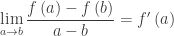
(11)         \displaystyle \underset{{a\to b}}{\mathop{{\lim }}}\,\frac{{f\left( a \right)-f\left( b \right)}}{{a-b}}={f}'\left( a \right)

Expression (6) is \displaystyle {f}'\left( a \right) – Fermat unknowingly is using the derivative! After which he set it equal to 0 and solved to find the x-coordinates of the critical points.

So, did he or didn’t he use calculus? You decide.


Limit of Composite Functions

Recently, a number of questions about the limit of composite functions have been discussed on the AP Calculus Community bulletin board and also on the AP Calc TEACHERS – AB/BC Facebook page. The theorem that we would like to apply in these cases is this:

If f is continuous at b and \underset{{x\to a}}{\mathop{{\lim }}}\,g\left( x \right)=b, then \underset{{x\to a}}{\mathop{{\lim }}}\,f\left( {g\left( x \right)} \right)=f\left( b \right).

That is, \underset{{x\to a}}{\mathop{{\lim }}}\,f\left( {g\left( x \right)} \right)=f\left( {\underset{{x\to a}}{\mathop{{\lim }}}\,g\left( x \right)} \right)

The problem is that in the examples one or the other of the hypotheses (continuity or the existence of  \underset{{x\to a}}{\mathop{{\lim }}}\,g\left( x \right)) is not met. Therefore, the theorem cannot be used. This does not mean that the limits necessarily do not exist, rather that we need to find some other way of determining them. We need a workaround. Let’s look at some.

Example 1: The first example is from the 2016 BC International exam, question 88. Students were given the graph at the right and asked to find  \displaystyle \underset{{x\to 0}}{\mathop{{\lim }}}\,f\left( {1-{{x}^{2}}} \right).

At first glance it appears that as x approaches zero,  \left( {1-{{x}^{2}}} \right) approaches 1 and the limit does not exist since f is not continuous at 1, so the theorem cannot be used. However, on closer examination, we see that \left( {1-{{x}^{2}}} \right) is always less than 1, so \left( {1-{{x}^{2}}} \right) is approaching 1 from the left (or from below). Therefore, as f approaches 1 from the left \displaystyle \underset{{x\to 0}}{\mathop{{\lim }}}\,f\left( {1-{{x}^{2}}} \right)=\underset{{x\to {{1}^{-}}}}{\mathop{{\lim }}}\,f\left( x \right)=3

Another approach is to try to write the equation of f. Although we cannot be certain, it appears that: f\left( x \right)={{x}^{2}}+2,x<1.

Then,  f\left( {1-{{x}^{2}}} \right)={{\left( {1-{{x}^{2}}} \right)}^{2}}+2={{x}^{4}}-2{{x}^{2}}+3,x<1. In this form the limit is obviously 3.

Example 2: The second example is also based on a graph. Given the graph of a function f, shown at the left, what is  \displaystyle \underset{{x\to 0}}{\mathop{{\lim }}}\,f\left( {f\left( x \right)} \right) ?

\underset{{x\to 0}}{\mathop{{\lim }}}\,f\left( x \right)=2. Since f is not continuous at 2, the theorem cannot be used. But, notice that as x approaches 0 from both sides, the limit 2 is approached from the left (from below). So we need to find the value of f as its argument approaches  {{2}^{-}}. From the graph, this value is zero; So, \underset{{x\to 0}}{\mathop{{\lim }}}\,f\left( {f\left( x \right)} \right)=0


To clarify this a little more, let’s look at a similar problem suggested by Sondra Edwards on the Facebook site: Consider this similar function:

Now as we approach 0 from both sides  \underset{{x\to 0}}{\mathop{{\lim }}}\,f\left( x \right)=2 approached from both sides. But now f(2) does not exist (DNE). (This is the “outside” f, which is not continuous here.) This time, the limiting value, 2, is approached from both sides. Therefore, \underset{{x\to 0}}{\mathop{{\lim }}}\,f\left( {f\left( x \right)} \right) DNE. There is no way to work around the discontinuity.
For a similar question see here


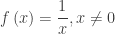
Example 3: If \displaystyle f\left( x \right)=\frac{1}{x},x\ne 0, what is \displaystyle \underset{{x\to 0}}{\mathop{{\lim }}}\,f\left( {f\left( {x)} \right)} \right) ?

Here again, the theorem cannot be used, since the “inside” function has no limit as x approaches 0. But, this function is its own inverse, so \displaystyle f\left( {f\left( {x)} \right)} \right)=x, and \displaystyle \underset{{x\to 0}}{\mathop{{\lim }}}\,f\left( {f\left( x \right)} \right)=\underset{{x\to 0}}{\mathop{{\lim }}}\,x=0


Infinite Musings

Students get confused about infinity, \infty , because they think of it as a number, because \infty used like a number. Even though they know there is no largest number, they think of infinity as the largest number.

In studying limits, the starting point of calculus, infinite limits come up early on. We tell them \displaystyle \underset{{x\to 0}}{\mathop{{\lim }}}\,\frac{1}{{{{x}^{2}}}}=\infty . But what we really mean, and what this symbol means, is that by taking x close enough to 0, \displaystyle\frac{1}{{{{x}^{2}}}} eventually becomes larger that any number they choose, no matter how large.

So, instead why don’t we just say \displaystyle \underset{{x\to 0}}{\mathop{{\lim }}}\,\frac{1}{{{{x}^{2}}}}>M where M is any real number? (And as I always suggest when you see the word “any” replace it with “every” and “all.”

    • \displaystyle \underset{{x\to 0}}{\mathop{{\lim }}}\,\frac{1}{{{{x}^{2}}}}>M where M is any real number
    • \displaystyle \underset{{x\to 0}}{\mathop{{\lim }}}\,\frac{1}{{{{x}^{2}}}}>M where M represents every real number
    • \displaystyle\underset{{x\to 0}}{\mathop{{\lim }}}\,\frac{1}{{{{x}^{2}}}}>M where M is all real numbers

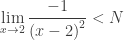
Likewise, \displaystyle \underset{{x\to 2}}{\mathop{{\lim }}}\,\frac{{-1}}{{{{{\left( {x-2} \right)}}^{2}}}}<N where N is any number, instead of saying the limit is -\infty .

Infinity, \infty , is really defined by this idea; it’s what “infinity” means.

Consider, \displaystyle \underset{{x\to 0}}{\mathop{{\lim }}}\,\frac{1}{x} . Here, you cannot say the expression is larger than any number (because of the negative values approaching zero from the left), so obviously there is no limit, the limit does not exist, DNE, and using \infty is wrong).

To answer my own question, we don’t do this because we’d have to change all the calculus books, and that’s not going to happen. So, don’t do it. Maybe you can start with this and then quickly switch over to the shorthand version  \infty .

For more on using \infty and DNE see the post Finding Limits and Good Question 5


.