Get(ting) ready

August and the school year is about to start!

As I did last year, this year my weekly posts will point you to previous posts on topics that will be coming up a week or two later. I try to stay a little ahead of you so you’ll have time to read them and incorporate what you feel is helpful into your plans. I will occasionally write some new posts as ideas come to me. (You could help them come by sending them. Send your questions and suggestions to LinMcMullin2@gmail.com)

Resources

First, here are some suggestions on pacing.

The Course and Exam Description

  • The Course and Exam Description  (CED)This is the official course description from the College Board. The individual list of topics that are tested on the exams (the Concept Outline) begins on page 11 and are listed in the Essential Knowledge (EK) column along with its Big Idea (BI), and Learning Outcome (LO) . Also, you will find the Mathematical Practices (MPACs) starting on page 8. These apply to all the topics.


  • To help you organize all this see my post on Getting Organized using Trello boards. A board listing all the Essential Knowledge and MPAC items are included.

Exam Questions

AP Calculus teachers should have a collection of the past AP Exams handy. Use them for homework, quizzes, and test through the year. Study them yourself to understand the content and style of the questions. Here are some places to find them:

  • The College Board has “home pages” for each course with links to past exams and other good information. AB Home Page and BC Home Page.


  • Another good reference is Ted Gott’s free-response question index and his MC unsecure Index by topic 1998 to 2018 The indices reference all the released free-response and multiple-choice questions. They are Excel spreadsheets. Each question is referenced to its Key Idea, LO and EK and includes a direct link to the text of the question. Click on the drop-down arrow at the top of each column and choose questions exactly on the EK you want to see. Ted plans to update this after the new multiple-choice questions are released. I will let you know when and where it is available. Thank you again, Ted!


  • I have an index of a different sort. It lists the ten Type Problems and which question, multiple-choice and free-response, that are of each type. You can find it here. This will be updated when the 2018 exams become available.


  • Past free-response questions that have been released along with commentary, actual student samples, and data can be found at AB FRQ on AP Central and here BC FRQ on AP Central. Be aware that these are available to anyone including your students.


  • Multiple-choice questions from actual exams are also available. The 2012 exam in the blue box on the course home pages (see above). This is open to anyone including students. More recent exams can be found at your audit website under “secure document” on the lower left side. This must be kept confidential because teachers use them for practice exams – they may not be posted on-line, on your school website or elsewhere, or even allowed out of your classroom on paper. Unfortunately, some teachers have not obeyed these rules and the exams can be found online by students with very little effort. Be aware that, nevertheless, your students may have access to the secure questions. For my suggestion on how to handle that see A Modest Proposal.

The AP Calculus Community

  • Finally, if you are not already a member, I suggest you join the AP Calculus Community. We are fast approaching 17,000 members all interested in AP Calculus. The community has an active bulletin board where you can ask and answer questions about the courses. Teachers and the College Board also post resources for you to use. College Board official announcements are also posted here. I am the moderator of the community and I hope to see you there!

Have a great year!

PS: Here is a link to some precalculus topics that come up in calculus

Summer Fun

Every Spring I have a lot of fun proofreading Audrey Weeks’ new Calculus in Motion illustrations for the most recent AP Calculus Exam questions. These illustrations run on Geometers’ Sketchpad. In addition to the exam questions Calculus in Motion (and its companion Algebra in Motion) include separate animations illustrating most of the concepts in calculus and algebra. This is a great resource for your classes.

The proofreading and the cross-country conversations with Audrey give me a chance to learn more about the questions.

This year, I really got into 2018 AB 6, the differential equation question. I wrote an exploration (or as the kids would say “worksheet”) on a function very similar to the differential equation in that question. The exploration, which is rather long, includes these topics:

  • Finding the general solution of the differential equation by separating the variables
  • Checking the solution by substitution
  • Using a graphing utility to explore the solutions for all values of the constant of integration, C
  • Finding the solutions’ horizontal and vertical asymptotes
  • Finding several particular solutions
  • Finding the domains of the particular solutions
  • Finding the extreme value of all solutions in terms of C
  • Finding the second derivative (implicit differentiation)
  • Considering concavity
  • Investigating a special case or two

I also hope that in working through this exploration students will learn not so much about this particular function, but how to use the tools of algebra, calculus, and technology to fully investigate any function and to find all its foibles.

Students will need to have studied calculus through differential equations before they start the exploration. I will repost it next January for them.

The exploration is here for you to try. Try it before you look at the solutions. It will give you something to do over the summer – well not all summer, only an hour or so.

As always, I appreciate your feedback and comments. Please share them with me using the reply box below.


There will be only occasional, very occasional, posts over the Summer. More regular posting will begin again in August. Enjoy the Explorations, and, more important, enjoy the Summer!

.


Good Question 18: 2018 BC 2(b)

In this post we look at another part of the AP Calculus BC exam. Good Question 15 discussed the unusual units in 2018 BC 2(a). In this post we look at 2018 BC 2(b) where units help us find the correct integral to answer the question.

How do you answer a question of a type you’ve never seen before? I expect that’s what many of the students taking the 2018 AP Calculus exam were asking when they got to BC 5. If you’ve never done a density question how do you handle this one? 

The question concerns density. Density gives you how much of something exists in a certain length, area, or volume.  Density questions have appeared on the exam now and then, most recently 2008 AB 92 (which really isn’t recent, but then there are a lot of questions we never see). I have a blog post about the density here with several examples. In that post the alternate solution to example 3 explained how I used a unit analysis to find the answer; I used a similar approach here.

2018 BC 2 (b)

The stem of the question tells us that at a depth of meters, 0 < h < 30, the number of plankton in a cubic meter of sea water is modeled by p\left( h \right)=0.2{{h}^{2}}{{e}^{{-0.0025{{h}^{2}}}}} million cells per cubic meter. Part (b) asks for the number of million of plankton in a column of water whose horizontal cross sections have a constant area of 3 square meters.

If the density were constant, then it is just a matter of multiplying the volume of the column times the constant density. Alas, the density is not constant; it varies with the depth. What to do?

Since an amount is asked for, you usually look around for a rate to integrate. Density is a kind of rate: the units are millions of cells per cubic meter. You need to integrate something concerning the density so that you end up with millions of cells; something that will “cancel” the cubic meters.

Consider a horizontal slice thru the column at depth h meters. While I’m not sure plankton is a good topping for pizza, you could picture this as a rather large pizza box whose sides are \sqrt{3} meters long and whose height is  \Delta h meters. This box has a volume of 3 \Delta h cubic meters. For small values of \Delta h the number of million plankton in the box is nearly constant, so at depth hi , there are p(hi) million plankton per cubic meter or {3p\left( {{{h}_{i}}} \right)\Delta h} million plankton in the box.

Notice how the units of the individual quantities combine to assure you the final quantity has the correct units:

\displaystyle (3\text{ square meters)}\cdot \left( {p\left( {{{h}_{i}}} \right)\text{ }\frac{{\text{million plankton}}}{{\text{cubic meters}}}} \right)\left( {\Delta h\text{ meters}} \right)=3p\left( {{{h}_{i}}} \right)\Delta h\text{ million plankton}

Now to find the amount in the column of water we can add up a stack of “pizza boxes.” The sum is \sum\limits_{{i=1}}^{n}{{3p\left( {{{h}_{i}}} \right)\Delta h}}. Now, if we take thinner boxes by letting \Delta h\to 0, we are looking at a Riemann sum. And calculus gives us the answer.

\displaystyle \underset{{n\to \infty }}{\mathop{{\lim }}}\,\sum\limits_{{i=1}}^{n}{{3p\left( {{{h}_{i}}} \right)\Delta h}}=\int_{0}^{{30}}{{3p\left( h \right)dh}}\approx 1,675 million plankton in the column of water (rounded to the nearest million as directed in the question.)


Previous Good Questions can be found under the “Thru the Year” tab on the black navigation bar at the top of the page, or here.


Renumbered 3-14-24 Was Question 16.

Good Question 15: 2018 BC 2(a)

My choices for the Good Question series are somewhat eclectic. Some are chosen because they are good, some because they are bad, some because I learned something from them, some because they can be extended, and some because they can illustrate some point of mathematics. This question and the next, Good Question 16, are in the latter group. They both concern units. They both are taken from this year’s AP calculus BC exam; both are suitable for AB classes. In this question 2018 BC 2(a) has some unusual units and in the next 2018 BC 2(b) the units help you figure out what to do. Part (c) concerns an improper integral and pard (d) is about parametric equation, neither of these are AB topics. 

2018 BC 2(a)

2018 BC 2 gave an equation that modeled the density p(h) of plankton in a sea in units of millions of cells per cubic meter, as a function of the depth, h, in meters.  Specifically, p\left( h \right)=0.2{{h}^{2}}{{e}^{{-0.0025{{h}^{2}}}}} for 0\le h\le 30. Part (a) asked for the value of {p}'\left( {25} \right) and also asked students “Using correct units, [to] interpret the meaning of {p}'\left( {25} \right) in the context of the problem.”

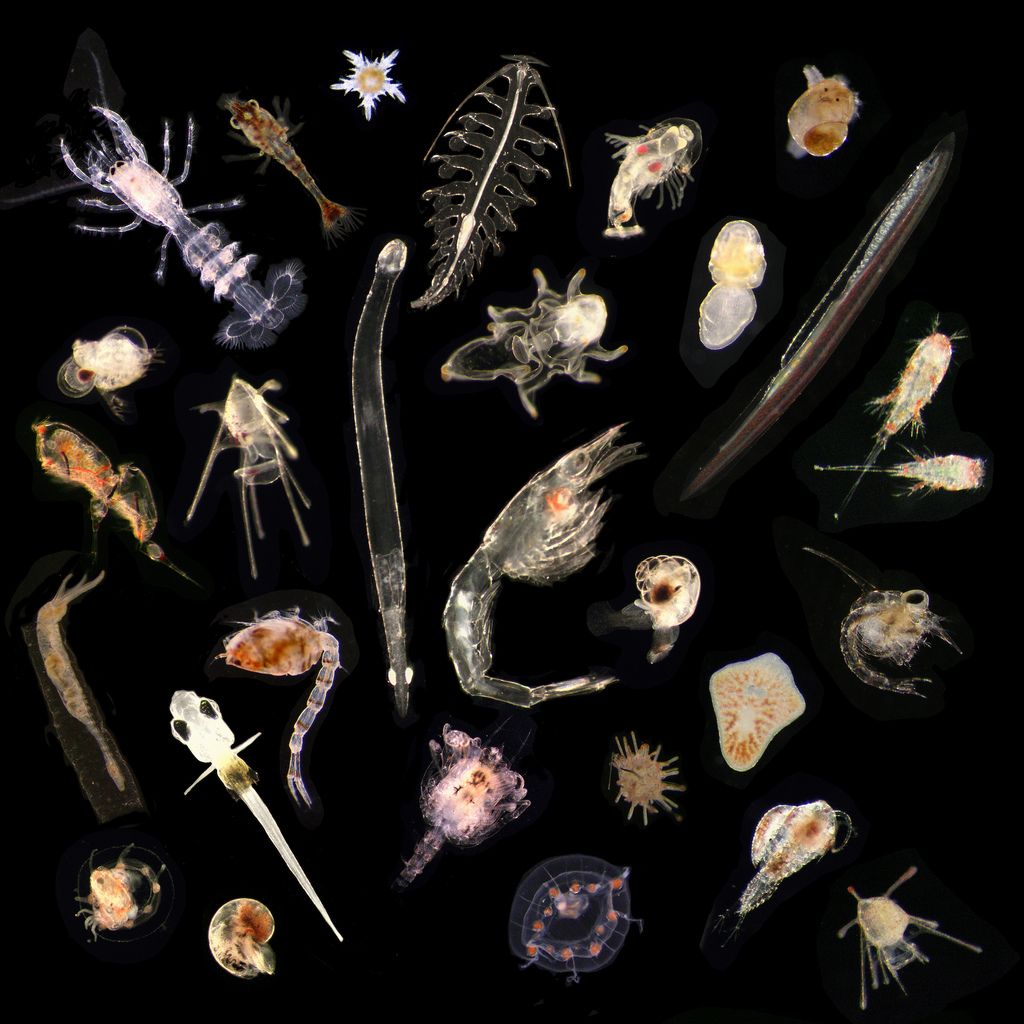
Plankton

This was a calculator active question, so the computation is easy enough: {p}'\left( {25} \right)=-1.17906

Now units of the derivative are always very easy to determine; this should be automatic. The derivative is the limit of a difference quotient, so its units are the units of the numerator divided by the units of the denominator. In this case that’s millions of cells per cubic meter per meter of depth.

While “millions of cells per meter to the fourth power” is technically correct and will probably earn credit, what is a meter to the fourth power?

It is similar to the better-known situation with velocity and acceleration. I never liked the idea of saying the acceleration is so many meters per square second. What’s a square second? Are there round seconds? Acceleration is the change in velocity in meters per second per second; that is, at a particular time the velocity is changing at the rate of so-many meters per second each second

Returning to the question, a cubic meter (volume) and a meter of depth (linear) are not things that you should combine. The notational convenience of writing meters to the fourth power hides the true meaning. So, a better interpretation is “At depth of  25 meters, the number cells is decreasing at the rate of 1.179 million cells per cubic meter per meter of depth.” or “The number of cells changing at the rate of -1.179 million cells per cubic meter per meter of depth.”

Had the model been given using volume units such as millions of cells per liter, then the units of the derivative would be millions of cells per liter per meter. That makes more sense.

But what does it mean?

Let’s look at the graph of the derivative. The window is 0 < h < 30 and –2.5 < p(x) < 2.5

It means, that as we pass thru that thin (thickness \Delta h\to 0) film of water 25 meters down, there are approximately 1.179 million cells per cubic meter less than in the thin film right above it and more than in the thin film right below it.

For reference, p\left( {25} \right)\approx 26.2014 million cells per cubic meter. Of course, that thin (thickness \Delta h\to 0) film of water has very little volume; it is kind of difficult to think of a cubic meter exactly 25 meters below the surface (maybe a cube extending from 24.5 meters to 25.5 meters?). As \Delta h\to 0 does a cubic meter approach a square meter?

The cubic meter above h = 25 has \displaystyle \int_{{24}}^{{25}}{{p\left( h \right)(1)dh}}=26.763 cells and the cubic meter below has 25.586 million cells. This is a decrease of 1.1767 million cells. So, the derivative is reasonable.
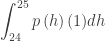
(To make the units of \displaystyle \int_{{24}}^{{25}}{{p\left( h \right)(1)dh}} correct, I included a factor of 1 square meter, this multiplied by p(h) million cells per cubic meter and by dh in meters give a result of millions of cells. More on why this is necessary in Good Question 16 on density.)


Previous Good Questions can be found under the “Thru the Year” tab on the black navigation bar at the top of the page, or here.


Exam Day !

Best wishes to everyone tomorrow.

Hope your students do well!

NCTM Calculus Panel Discussion

The annual AP Calculus Panel Discussion at the NCTM Annual meeting was held on Saturday April 28, 2018. The principal speaker was Stephen Davis, the chief reader for calculus. Stephen has made his slides available for anyone who is interested. The slides are here http://www.ncaapmt.org/archive/crTalks/nctm-apr2018-notes.pdf .

The items highlighted in blue are the ones Stephen discussed in detail. Thank you to Stephen for making them available to everyone. The last slide for each of the 9 questions contains comments on the scoring of the question.

Here are a few notes I took at the meeting about specific problems from the 2017 operational (Main US) exam:

  1. AB3/BC3 (d) Avoid words like “pointy” it is better to discuss the one-sided limits.
  2. AB4/BC4 (b) Students need to be able to jump into the middle of the problem. Some students solved the differential equation, then differentiated the answer to get to the equation that was given.
  3. AB5 Sign charts appear on the standards. This is not a change; sign charts are excellent ways to organize information. However, sign charts should not be used as justifications; readers want students to write about what they the sign chart tells them.
  4. AB 6 (d) Justify by showing (saying) that the hypotheses of the theorem or definition are met.
  5. BC 2 (c) Students had trouble understanding that w(theta) = g(theta) – f(theta) was. They seemed not to understand what g and w represented graphically.
  6. BC 5 (d) Either the integral test or the limit comparison test may be used. Students need to state the conditions of whichever test they use.
  7. Communication is becoming more important in all questions.

Teachers should look at and study the “Chief Reader Report” that is available for each exam on the same page as the questions and scoring standards at AP Central. The sample student responses are also helpful in understanding what is and is not a good response.


A Few More Things

The AP Calculus AB and BC exams are scheduled for Tuesday May 15, 2018 at 08:00 local time. That’s about 5 weeks away. I’ve posted all my review notes, finishing well ahead of time so, if you find something useful in them, you’ll have time to incorporate it into your review. I hope you find them helpful. The links to the 12 review posts are at the end of this post. 

What this also means is that I finished my year before you. There will be only occasional posts between now and August when I’ll start again going through the year. Should I find something interesting to write about, I’ll post it. To be sure you don’t miss anything, I suggest you click on the “Follow Teaching Calculus” link at the very bottom of the right hand column. This will inform you of new post by email. Meanwhile, if you have any questions, suggestions, or anything you’d like my thoughts on please email me at lnmcmullin@aol.com or add a comment at the end of any post.

Happy reviewing. Good luck to your students on the exam!

For today a few short items, including a great new resource. 


On grading practice exams

When going over their students’ work on the real AP Exam questions teachers often get bogged down in the minutia of grading. They want, quite naturally, to give their students every point they earned, but not more than that. They have questions like, “What is they forget the dx?”  or “Do they have to include units?” This is my suggestion originally posted to the AP Calculus Community bulletin board a few weeks ago:

As exam time nears, teachers become concerned about exactly what to give credit for and what not to give credit for when grading their students’ work on past AP free-response questions.

Chief Reader Stephen Davis recently posted a note on the grading of a fictitious exam question showing how 2 points might have been awarded on a L’Hospital’s Rule question.  The note is interesting because it shows the detail that exam leaders consider when deciding what to accept and what not; it shows the detail that readers must keep in mind while grading. This type of detail with the examples is given to the readers in writing for each part of each question. With about 500,000 exams each year, this level of detail is necessary for fairness and consistency in the scoring.

BUT, as teachers preparing your students for the exam you really don’t need to be concerned about all the fine points (2.5 pages’ worth) as readers do. Encourage your students to answer the question correctly and show the required work. This is shown on the scoring standard for each question (on Stephen’s sample it is in the ruled area directly below the question). Don’t worry about the fine points – what if I say this, instead of that. If your students try to answer and show their work but miss or overlook something, the readers will do their best to follow the student’s work and give him or her the points they have earned.

Why show your students the minimum they can get away with? That does not help them! Do your students a favor: score the review problems more stringently than the readers. If their answer is not quite right, take off some credit and help them learn how to do better. It will help them in the long run.


NCTM AP Calculus Panel Discussion

This is an invitation to everyone attending NCTM Annual Meeting in Washington D.C. Please join us for the annual AP Calculus Panel Discussion.

Date: Saturday April 28, 2018 from 8:00 to 10:30 AM

Location:  Room 159AB in the Walter E. Washington Convention Center, Washington D.C.

The tentative speakers are

·         Stephen Davis, chief reader for AP Calculus who will discuss the 2017 exams

·         Stephanie Ogden, from the College Board

·         Karen Hyers member of the calculus development committee

·         Mark Howell long time reader, table leader and author

·         Lin McMullin Moderator of the AP Calculus Community and your host.

After the panel discussion there will be a question and answer period, and a raffle.

No RSVP is necessary. Just come, meet the panelists, and enjoy the discussion.

The panel is sponsored jointly by D & S Marketing System, Inc., Bedford, Freeman and Worth, and HP.


A new Index of Multiple-choice Questions

Once again we have Ted Gott to thank for a new spreadsheet collating each multiple-choice question with the Learning Objective (LO) and the Essential Knowledge (EK) listed in the Course and Exam Description.

Here is the link to the new Type Analysis 2018

And here again is his Free-response Index by topic

THANK YOU, TED !


And Finally

As I’m sure you are aware, the College Board makes past exams available to teachers to use in their class as assignments, on quizzes and tests, and as good review material for the AP exams. To keep students from seeing them the exams are made secure and available only to teachers with an audit for the course. Teachers are not allowed to post them anywhere on-line, even their own web page. They may not let students take them from their classroom.

Alas, the exams are available on-line; students can find them.

The College Board takes this seriously; it is a violation of the College Board’s copyright. The CB’s lawyers contact the person or group who posted them and make them take them down. But more exams pop up. Please, follow the rules and do not post anything. If you or your students do find a secure exam (2013, 2014, 2015, 2016, or 2017) please send the URL to me at lnmcmullin@aol.com and I’ll send it to the CB. You may also send it directly to the CB at copyrightviolations@collegeboard.org.

I have little faith that this will keep the exams off-line or keep students from finding them. To that end I refer you to a suggestion I made in a previous post, A Modest Proposal: Don’t count the exams for any sort of grade. Use them only to help students find out what they do not understand.


Schedule of the review notes and questions by type.