Differentiation Techniques

Maria Gaetana Agnesi

So, no one wants to do complicated limits to find derivatives. There are easier ways of course. There are a number of quick ways (rules, formulas) for finding derivatives of the Elementary Functions and their compositions. Here are some ways to introduce these rules; these are the subject of this week’s review of past posts.

Why Radians?

The Derivative I        Guessing the derivatives from the definition

The Derivative II      Using difference Quotient to graph and guess

The Derivative Rules I    The Power Rule

The Derivative Rules II       Another approach to the Product Rule from my friend Paul Foerster

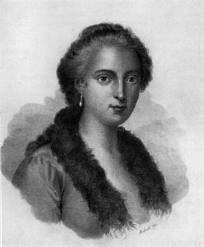
The Derivative Rules III     The Quotient Rule developed using the Power Rule, an approach first suggested  by Maria Gaetana Agnesi (1718 – 1799) who was helping her brother learn the calculus.

Next week: The Chain Rule.


Difference Quotients

Difference quotients are the path to the definition of the derivative. Here are three posts exploring difference quotients.

Difference Quotients I  The forward and backward difference quotients

Difference Quotients II      The symmetric difference quotient and seeing the three difference quotients in action.  Showing that the three difference quotients converge to the same value.

Seeing Difference Quotients      Expands on the post immediately above and shows some numerical and graphical approaches using calculators and Desmos.

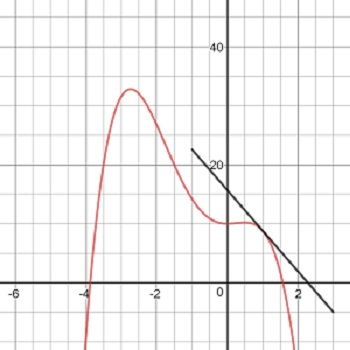
 Tangents and Slopes You can use this Desmos app now to preview some of the things that he tangent line can tell us about the graph of a function or save (or reuse) it for later when concentrating on graphs. Discuss slope in relation to increasing, decreasing, concavity, etc.

At Just the Right Time

Stamp out Slope-intercept Form


Working up to the derivative.

While limit is what makes all of the calculus work, people usually think of calculus as starting with the derivative. The first problem in calculus is finding the slope of a line tangent to a graph at a point and then writing the equation of that tangent line.

Local Linearity is the graphical manifestation of differentiability. If you zoom-in of the graph of a function (at a point where we will soon say the function is differentiable), the graph eventually looks like a line: the graph appears to be straight, and its slope is the number we will call its derivative.

To do this we need to zoom-in numerically. Zooming-in numerically is accomplished by finding the slope of a secant line, a line that intersects the graph twice, and then finding the limit of that slope as the two points come closer together.

This week’s posts start with local linearity and tangent lines. They lead to the difference quotient and the equation of the tangent line.

Local Linearity I

Local Linearity II      Working up to difference quotient. The next post explains this in more detail.

Tangent Lines approaching difference quotients on calculator by graphing tan line.

Next week: Difference Quotients.


Continuity

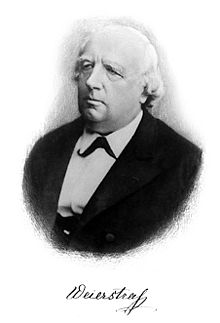
Karl Weierstrass (1815 – 1897) was the mathematician who (finally) formalized the definition of continuity. In that definition was the definition of limit. So, which came first – continuity or limit? The ideas and situations that required continuity could only be formalized with the concept of limit. So, looking at functions that are and are not continuous helps us understand what limits are and why we need them.

In the ideal world I mentioned last week, students would have plenty of work with continuous and not continuous functions. The vocabulary and notation, if not the formal definitions, would be used as early as possible. Then when students got to calculus, they would know the ideas and be ready to formalize the.

Using the definition of continuity to show that a function is or is not continuous at a point is a common question of the AP exams.

Continuity The definition of continuity.

Continuity Should continuity come before limits?

From One Side or the Other One-sided limits and one-sided differentiability

How to Tell Your Asymptote from a Hole in the Graph  From the technology series. Showing holes and asymptotes on a graphing calculator.

Fun with Continuity Defined everywhere and continuous nowhere. Continuous only at a single point.

Intermediate Weather  Using the IVT

Right Answer – Wrong Question Continuity or continuity on its domain


Limits

In an ideal world, I would like to have all students study limits in their precalculus course and know all about them when they get to calculus. Certainly, this would be better than teaching how to calculate derivatives in precalculus (after all derivatives are calculus, not pre… ). Here are a few of my previous posts on limit.

Why Limits?

Finding Limits  How to … and the use of “infinity” vs “DNE”

Dominance  Finding limits the easy way.

Deltas and Epsilons Not tested on the AP Exams; here’s why.

Asymptotes The graphical manifestation of limits at or equal to infinity.

Next Week: Continuity

.

Getting Ready

Today we continue to look at some previous posts that I hope will help you and your students throughout the year. We begin with some posts on graphing calculator use and then a few general things in three posts on beginning the year, followed by some mathematics I hope students know before they start studying the calculus.

Graphing Calculators

There are four things that students may, and are required to know how to do, for the AP Exams. But graphing calculators are not required just to answer a few questions on the exams. They are to encourage investigations and experimentation in all math classes. And not just graphing calculator use but all kinds of appropriate technology. So, don’t restrict yourself and your students to only those operations required on the exam. That said, here are previous posts on exam calculator use; as the year goes on there will be other posts on the use of graphing calculators and other technology in your class.

Starting School

A little late perhaps …

These posts discuss basic ideas that I always hoped students knew about mathematics before starting calculus


.

AP Calculus Resources

So, soon time to start another year – both for you and for me. In my over 200 posts to this blog I’ve discussed a lot of calculus topics in hopes that it may help some of my readers teach or learn about calculus. The problem is that I’ve sort of run out of topics and ideas. Nevertheless, I will write more. I would like your ideas, suggestions, and questions about calculus and teaching calculus. You may email me at lnmcmullin@aol.com. Thanks.

My plans for this year are to point you to some of my previous posts. Each week, to stay ahead of you, I will list links to previous posts that you may find helpful in the next week or two.

This post lists links to resources that AP Calculus teachers should have handy for reference during the year.

  • The Course and Exam Description  This is the official course description from the College Board. The individual list of topics that are tested on the exams (the Concept Outline) begins on page 11 and are listed in the Essential Knowledge (EK) column along with its Big Idea (BI), and Learning Outcome (LO) . Also, you will find the Mathematical Practices (MPACs) starting on page 8. These apply to all the topics. I have posts on each separately: see Mathematical Practices,  MPAC 1, MPAC 2, MPAC 3, MPAC 4, MPAC 5, and MPAC 6. Also, you will find a list of Instructional Approaches that outlines various ideas for use in your classes – and not just your calculus classes. The book also contains sample free-response and multiple-choice questions that show how the MPACs and Essential Knowledge item are related to each question.


  • To help you organize all this see my post on Getting Organized using Trello boards. A board listing all the Essential Knowledge and MPAC items are included.


  • Another good reference is MC unsecure Index by topic 1998 to 2018. This lists ALL the free-response questions from 1998 to the present (2016). This is an Excel spreadsheet. Each question is referenced to its Key Idea, LO and EK and includes a direct link to the text of the question. Click on the drop-down arrow at the top of each column and choose questions exactly on the EK you want to see. Ted plans to update this after the new multiple-choice questions are released. I will let you know when and where it is available. Thank you again, Ted!  Updated to include the 2017 FRQs. (August 2, 2017)


  • I have an index of a different sort. It lists the ten Type Problems and which question, multiple-choice and free-response, that are of each type. You can find it here. This will be updated when the 2017 exams become available.


  • The College Board has “home pages” for each course with links and other good information. AB Home Page and BC Home Page.


  • Past free-response questions that have been released along with commentary, actual student samples, and data can be found at AB FRQ on AP Central and here BC FRQ on AP Central. Be aware that these are available to anyone including your students.


  • Multiple-choice questions from actual exams are also available. The 2012 exam in the blue box on the course home pages (see above). This is open to anyone including students. More recent exams can be found at your audit website under “secure document” on the lower left side. This must be kept confidential because teachers use them for practice exams – they may not be posted on-line, on your school website or elsewhere, or even allowed out of your classroom on paper. Unfortunately, some teachers have not obeyed these rules and the exams can be found online by students with very little effort. Be aware that your students may have access to them. For my suggestion on how to handle that see A Modest Proposal.


  • Finally, if you are not already a member, I suggest you join the AP Calculus Community. A of the end of July, we have 15,210 members all interested in AP Calculus. The community has an active bulletin board where you can ask and answer questions about the courses. Teachers and the College Board also post resources for you to use. College Board official announcements are also posted here. I am the moderator of the community and I hope to see you there!

Have a great year!