Graph Analysis Questions (Type 3)

AP  Questions Type 3: Graph Analysis

The long name is “Here’s the graph of the derivative, tell me things about the function.”

Students are given either the equation of the derivative of a function or a graph identified as the derivative of a function with no equation is given. It is not expected that students will write the equation of the function from the graph (although this may be possible); rather, students are expected to determine important features of the function directly from the graph of the derivative. They may be asked for the location of extreme values, intervals where the function is increasing or decreasing, concavity, etc. They may be asked for function values at points. They will be asked to justify their conclusions.

The graph may be given in context and student will be asked about that context. The graph may be identified as the velocity of a moving object and questions will be asked about the motion. See Linear Motion Problems (Type 2)

Less often the function’s graph may be given and students will be asked about its derivatives.

What students should be able to do:

  • Read information about the function from the graph of the derivative. This may be approached by derivative techniques or by antiderivative techniques.
  • Find and justify where the function is increasing or decreasing.
  • Find and justify extreme values (1st and 2nd derivative tests, Closed interval test a/k/a Candidates’ test).
  • Find and justify points of inflection.
  • Find slopes (second derivatives, acceleration) from the graph.
  • Write an equation of a tangent line.
  • Evaluate Riemann sums from geometry of the graph only. This usually involves familiar shapes such as triangles or semicircles.
  • FTC: Evaluate integral from the area of regions on the graph.
  • FTC: The function, g(x), maybe defined by an integral where the given graph is the graph of  the integrand, f(t), so students should know that if,
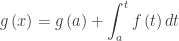
\displaystyle g\left( x \right)=g\left( a \right)+\int_{a}^{t}{f\left( t \right)dt} then  {g}'\left( x \right)=f\left( x \right)  and  {{g}'}'\left( x \right)={f}'\left( x \right).

In this case, students should write {g}'(t)=f\left( t \right) on their answer paper, so it is clear to the reader that they understand this.

Not only must students be able to identify these things, but they are usually asked to justify their answer and reasoning. See Writing on the AP Exams for more on justifying and explaining answers.

The ideas and concepts that can be tested with this type question are numerous. The type appears on the multiple-choice exams as well as the free-response. Between multiple-choice and free-response this topic may account for 15% or more of the points available on recent tests. It is very important that students are familiar with all the ins and outs of this situation.

As with other questions, the topics tested come from the entire year’s work, not just a single unit. In my opinion many textbooks do not do a good job with integrating these topics, so be sure to use as many actual AP Exam questions as possible. Study past exams; look them over and see the different things that can be asked. The Graph Analysis problem may cover topics primarily from primarily from Unit 4, Unit 5, and Unit 8 of the 2019 CED 

For some previous posts on this subject see October 1517192426 (my most read post), 2012 and  January 2528, 2013

Free-response questions:

  • Function given as a graph, questions about its integral (so by FTC the graph is the derivative):  2016 AB 3/BC 3, 2018 AB3
  • Table and graph of function given, questions about related functions: 2017 AB 6,
  • Derivative given as a graph: 2016 AB 3 and 2017 AB 3
  • Information given in a table 2014 AB 5

Multiple-choice questions from non-secure exam. Notice the number of questions all from the same year; this is in addition to one free-response question (~25 points on AB and ~23 points on BC out of 108 points total)

  • 2012 AB: 2, 5, 15, 17, 21, 22, 24, 26, 76, 78, 80, 83, 82, 84, 85, 87
  • 2012 BC 3, 11, 12, 15, 12, 18, 21, 76, 78, 80, 81, 84, 88, 89

A good activity on this topic is here. The first pages are the teacher’s copy and solution. Then there are copies for Groups A, B, and C. Divide your class into 3 or 6 or 9 groups and give one copy to each. After they complete their activity have the students compare their results with the other groups.


Revised March 12, 2021


Linear Motion (Type 2)

AP  Questions Type 2: Linear Motion

We continue the discussion of the various type questions on the AP Calculus Exams with linear motion questions.

“A particle (or car, person, or bicycle) moves on a number line ….”

These questions may give the position equation, the velocity equation (most often), or the acceleration equation of something that is moving on the x– or y-axis as a function of time, along with an initial condition. The questions ask for information about motion of the particle: its direction, when it changes direction, its maximum position in one direction (farthest left or right), its speed, etc.

The particle may be a “particle,” a person, car, a rocket, etc.  Particles don’t really move in this way, so the equation or graph should be considered to be a model. The question is a versatile way to test a variety of calculus concepts since the position, velocity, or acceleration may be given as an equation, a graph, or a table; be sure to use examples of all three forms during the review.

Many of the concepts related to motion problems are the same as those related to function and graph analysis (Type 3). Stress the similarities and show students how the same concepts go by different names. For example, finding when a particle is “farthest right” is the same as finding the when a function reaches its “absolute maximum value.” See my post for Motion Problems: Same Thing, Different Context for a list of these corresponding terms. There is usually one free-response question and three or more multiple-choice questions on this topic.

The positions(t), is a function of time. The relationships are:

  • The velocity is the derivative of the position, {s}'\left( t \right)=v\left( t \right). Velocity is has direction (indicated by its sign) and magnitude. Technically, velocity is a vector; the term “vector” will not appear on the AB exam.

  • Speed is the absolute value of velocity; it is a number, not a vector. See my post for Speed.
  • Acceleration is the derivative of velocity and the second derivative of position, \displaystyle a\left( t \right)={v}'\left( t \right)={{s}''}\left( t \right). It, too, has direction and magnitude and is a vector.
  • Velocity is the antiderivative of the acceleration.
  • Position is the antiderivative of velocity.

What students should be able to do:

  • Understand and use the relationships above.
  • Distinguish between position at some time and the total distance traveled during the time period.
  • The total distance traveled is the definite integral of the speed (absolute value of velocity) \displaystyle \int_{a}^{b}{\left| v\left( t \right) \right|}\,dt.
  •  Be sure your students understand the term displacement; it is the net distance traveled or distance between the initial position and the final position. Displacement, is the definite integral of the velocity (rate of change): \displaystyle \int_{a}^{b}{v\left( t \right)}\,dt.
  • The final position is the initial position plus the displacement (definite integral of the rate of change from xa to x = t): \displaystyle s\left( t \right)=s\left( a \right)+\int_{a}^{t}{v\left( x \right)}\,dx Notice that this is an accumulation function equation (Type 1).
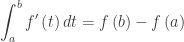
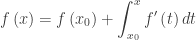
  • Initial value differential equation problems: given the velocity or acceleration with initial condition(s) find the position or velocity. These are easily handled with the accumulation equation in the bullet above, but may also be handled as an initial value problem.
  • Find the speed at a given time. The speed is the absolute value of the velocity.
  • Find average speed, velocity, or acceleration
  • Determine if the speed is increasing or decreasing.
    • If at some time, the velocity and acceleration have the same sign then the speed is increasing.If they have different signs the speed is decreasing.
    • If the velocity graph is moving away from (towards) the t-axis the speed is increasing (decreasing). See the post on Speed.
    • There is also a worksheet on speed here
    • The analytic approach to speed: A Note on Speed
  • Use a difference quotient to approximate the derivative (velocity or acceleration) from a table. Be sure the work shows a quotient.
  • Riemann sum approximations.
  • Units of measure.
  • Interpret meaning of a derivative or a definite integral in context of the problem

Shorter questions on this concept appear in the multiple-choice sections. As always, look over as many questions of this kind from past exams as you can find.

This may be an AB or BC question. The BC topic of motion in a plane, (Type 8: parametric equations and vectors) will be discussed in a later post.

The Linear Motion problem may cover topics primarily from primarily from Unit 4, and also from Unit 3, Unit 5, Unit 6, and Unit 8 (for BC) of the 2019 CED

Free-response examples:

  • Equation stem 2017 AB 5,
  • Graph stem: 2009 AB1/BC1,
  • Table stem 2019 AB2

Multiple-choice examples from non-secure exams:

  • 2012 AB 6, 16, 28, 79, 83, 89
  • 2012 BC 2, 89


Rate & Accumulation (Type 1)

The Free-response Questions

There are ten general categories of AP Calculus free-response questions.

NOTE: The type number I’ve assigned to each type DO NOT correspond to the 2019 CED Unit numbers. Many AP Exam questions have parts from different Units. The CED Unit numbers will be referenced in each post.


AP  Questions Type 1: Rate and Accumulation

These questions are often in context with a lot of words describing a situation in which some things are changing. There are usually two rates acting in opposite ways (sometimes called an in-out question). Students are asked about the change that the rates produce over some time interval either separately or together.

The rates are often fairly complicated functions. If they are on the calculator allowed section, students should store the functions in the equation editor of their calculator and use their calculator to do any graphing,  integration, or differentiation that may be necessary.

The main idea is that over the time interval [a, b] the integral of a rate of change is the net amount of change

\displaystyle \int_{a}^{b}{{f}'\left( t \right)dt}=f\left( b \right)-f\left( a \right)

If the question asks for an amount, look around for a rate to integrate.

The final (accumulated) amount is the initial amount plus the accumulated change:

\displaystyle f\left( x \right)=f\left( {{x}_{0}} \right)+\int_{{{x}_{0}}}^{x}{{f}'\left( t \right)}\,dt,

where {{x}_{0}} is the initial time, and  f\left( {{x}_{0}} \right) is the initial amount. Since this is one of the main interpretations of the definite integral the concept may come up in a variety of situations.

What students should be able to do:

  • Be ready to read and apply; often these problems contain a lot of writing which needs to be carefully read.
  • Recognize that rate = derivative.
  • Recognize a rate from the units given without the words “rate” or “derivative.”
  • Find the change in an amount by integrating the rate. The integral of a rate of change gives the amount of change (FTC):

\displaystyle \int_{a}^{b}{{f}'\left( t \right)dt}=f\left( b \right)-f\left( a \right).

  • Find the final amount by adding the initial amount to the amount found by integrating the rate. If x={{x}_{0}} is the initial time, and f\left( {{x}_{0}} \right)  is the initial amount, then final accumulated amount is

\displaystyle f\left( x \right)=f\left( {{x}_{0}} \right)+\int_{{{x}_{0}}}^{x}{{f}'\left( t \right)}\,dt,

  • Write an integral expression that gives the amount at a general time. BE CAREFUL, the dt must be included at the correct place. Think of the integral sign and the dt as parentheses around the integrand.
  • Find the average value of a function
  • Understand the question. It is often not necessary to as much computation as it seems at first.
  • Use FTC to differentiate a function defined by an integral.
  • Explain the meaning of a derivative or its value in terms of the context of the problem. The explanation should contain (1) what it represents, (2) its units, and (3) how numerical argument applies in context.
  • Explain the meaning of a definite integral or its value in terms of the context of the problem. The explanation should contain (1) what it represents, (2) its units, and (3) how the limits of integration apply in context.
  • Store functions in their calculator recall them to do computations on their calculator.
  • If the rates are given in a table, be ready to approximate an integral using a Riemann sum or by trapezoids.
  • Do a max/min or increasing/decreasing analysis.

Shorter questions on this concept appear in the multiple-choice sections. As always, look over as many questions of this kind from past exams as you can find.

The Rate – Accumulation question may cover topics primarily from Unit 4, Unit 5, Unit 6 and Unit 8 of the 2019 CED.

Typical free-response examples:

Typical multiple-choice examples from non-secure exams:

  • 2012 AB 8, 81, 89
  • 2012 BC 8 (same as AB 8)


Updated January 31, 2019, March 12, 2021

Reviewing Resources 2022

This is a list of links to some resources for reviewing.

The 2020 AP Calculus AB and BC Course and Exam Description (CED) The 10 units in this document list which topics may be tested on the exams. The rule of thumb is that is a topic is not listed, then it will not be tested on the exams.

How, Not Only to Survive, but to Prevail… –  Notes and advice for your students. You may copy and duplicate this for your class.

Calculator Use on the AP Exams – hints and instruction.

Ted Gott’s Free-response Index – an excel spreadsheet searchable by topic, and referenced to the 2016 CED by Learning Objectives (LO) and Essential Knowledge (EK). While this is not the current CED, the EKs and LOs are similar and will help you find past questions on the topics.

Type Analysis 2021 a listing of the questions on both free-response (1998 – 2019) and and multiple-choice questions (2003, 2008, 2012 – 2019)  by type, so you can find them easily. I will update this as soon as the 2019 exams are released.

Next Tuesday I will begin a series of posts on the various “type” questions that appear on the AP Calculus exams. The schedule is below.


AP Exam Review

It will soon be time to start reviewing for the AP Calculus Exams. So, it’s time to start planning your review. For the next weeks through the beginning of April I will be posting notes for reviewing. There are not new; versions have been posted for the last few years and these are only slightly revised and updated. A schedule for the dates of the posts appears at the end of this post. My posts are intentionally scheduled before you will probably be needing them, so you can plan ahead. Most people start reviewing around the beginning or middle of April.

Ideas for reviewing for the AP Exam

Part of the purpose of reviewing for the AP calculus exams is to refresh your students’ memory on all the great things you’ve taught them during the rear. The other purpose is to inform them about the format of the exam, the style of the questions, the way they should present their answer, and how the exam is graded and scored.

Using AP questions all year is a good way to accomplish some of this. Look through the released multiple-choice exams and pick questions related to whatever you are doing at the moment. Free-response questions are a little trickier since the parts of the questions come from different units. These may be adapted or used in part.

At the end of the year I suggest you review the free-response questions by type – table questions, differential equations, area/volume, rate/accumulation, graph, etc. More detailed notes on what students needed to know about each of the ten types will be the topic of future posts over the next few weeks. Plan to spend a few days doing a selection of questions of one type so that student can see how that type question is asked, the format of the question (i.e. does it start with an equation, a table, or a graph), and the various topics that are tested. Then go onto the next type. Many teachers keep a collection of past free-response questions filed by type rather than year. This makes it easy to study them by type. The “types” do not align exactly with the units of the 2019 Course and Exam Description, since parts of each question often come from different units.

Student Goals

During the exam review period the students’ goal is to MAKE MISTAKES!  This is how you and they can know what they don’t know and learn or relearn it. Encourage mistakes!

Simulated Exam

Plan to give a simulated (mock) exam. Each year the College Board makes a full exam available. The free-response questions through 2019 are available here for AB  and  here for BC and the secure 2014 – 2019 exams are available through your audit website. If possible, find a time when your students can take an entire exam in one sitting (3.25 hours). Teachers often do this on a weekend day or in the evening. This will give your students a feel for what it is like to work calculus problems under test conditions. If you cannot get 3.25 hours to do this give the sections in class using the prescribed time. Some teachers schedule several simulated exams. Of course, you need to correct them and go over the most common mistakes.

Be aware that all the exams (yes, including the secure exams unfortunately) are avail online. Students can find them easily. For suggestions on how to handle this see Practice Exams – A Modest Proposal. 

Explain the scoring

There are 108 points available on the exam; each half (free-response and multiple-choice) is worth the same – 54 points. The number of points required for each score is set after the exams are graded.

For the AB exam, the minimum points required for each score out of 108 point are, very approximately:

  • for a 5 – 69 points,
  • for a 4 – 52 points,
  • for a 3 – 40 points,
  • for a 2 – 28 points.

The numbers are similar for the BC exams are again very approximately:

  • for a 5 – 68 points,
  • for a 4 – 58 points,
  • for a 3 – 42 points,
  • for a 2 – 34 points.

The actual numbers vary from year to year, but that is not important. What is important is that students to know is that they can omit or get wrong many questions and still earn a good score. Students may not be used to this (since they skip or get so few questions wrong on your tests!). They should not panic or feel they are doing poorly if they miss a number of questions. If they understand and accept this in advance they will calm down and do better on the exams. Help them understand they should gather as many points as they can, and not be too concerned if they cannot get them all. Doing only the first 2 parts of a free-response question will probably put them at the mean for that question. Remind them not to spend time on something that’s not working out, or that they don’t feel they know how to do.

Directions

Print a copy of the directions for both parts of the exam and go over them with your students. Especially, for the free-response questions explain the need to show their work, explain that they do not have to simplify arithmetic or algebraic expressions, and explain the three-decimal place consideration. Be sure they know what is expected of them.The directions are here can be found on any free-response released exams. Yes, this is boiler plate stuff, but take a few minutes to go over it with your students. They should not have to see the directions for the first time on the day of the exam. Emphasize  the need to clearly show their work and justify their answers, and the three-decimal accuracy rule. This rule and lots of other information is explained in detail in this article: How, not only to survive, but to prevail. Copy this article for you students!

Resources for reviewing

How, Not Only to Survive, but to Prevail… –  Notes and advice for your students. You may copy and duplicate this for your class.

Calculator Use on the AP Exams – hints and instruction.

Ted Gott’s Mujltiple-choice Index – an excel spreadsheet searchable by topic, and referenced to the CED by Learning Objectives (LO) and Essential Knowledge (EK)

Type Analysis 2018 a listing of the questions on both free-response and multiple-choice questions by type, so you can find them easily.


Revised for 2020,

Revised March 12, 2012

Some Notes

I didn’t come across anything calculusy to write about this week, so here are a few other items you might be interested in.

Two Explorations

Two explorations previously posted on topics that come up this time of year.

Differential Equations.

An exploration in Differential Equations is a summary/review exploration in which students will work with these topics using the tools of algebra, calculus, and technology to fully investigate a function and to find all its foibles.

    • Finding the general solution of the differential equation by separating the variables
    • Checking the solution by substitution
    • Using a graphing utility to explore the solutions for all values of the constant of integration, C
    • Finding the solutions’ horizontal and vertical asymptotes
    • Finding several particular solutions
    • Finding the domains of the particular solutions
    • Finding the extreme value of all solutions in terms of C
    • Finding the second derivative (implicit differentiation)
    • Considering concavity
    • Investigating a special case or two

Sequences

A Lesson on Sequences was originally posted last July. The lesson explores sequences and the Completeness Axiom. Parts of it could work for an Algebra 1 class studying Irrational numbers and all of it could be used as an introductory lesson on sequences in calculus.

If you use either or both of these, I’d like to hear about how they went. Please use to Comment button at the end of any post to share your experiences.


AP Calculus Panel Discussion

The AP Calculus panel discussion at the NCTM Annual Meeting in Chicago will take place on April 2, 2020 from 3:00 to 5:30 pm CST in room #E253d of the McCormick Place – Lakeside Center.

The speakers will include:

Julie Clarke, chief reader.

Stephanie Ogden, director, AP Calculus for the College Board.

Mary Wiltjer, Long time AP Calculus teacher and (fairly) new reader.

Lin McMullin, AP Calculus Community moderator and your host.

The main topic will be the scoring of the 2019 AP Calculus exams. There will be time for your questions for the panel. There will be a raffle. The event is sponsored by Bedford, Freeman and Worth publisher of AP Calculus textbooks, and D & S Marketing Systems, Inc. publishers of review books for AP subjects.

Hope you can make it.


Posts on reviewing for the AP Calculus Exams

I have revised and updated the series of posts on reviewing for the exams that I post each year. This series of 12 posts will appear on Tuesdays and Fridays starting February 25, 2020, ending in the beginning of April. These include the 10 “type” questions that appear on the free-response sections with suggestions on what and how to review them. You’re not behind schedule: most classes begin reviewing in April. These are posted before then, so you’ll have time to use them for planning ahead of time.

Tuesday February 25, 2020 – AP Exam Review
Friday, February 28, 2020 – Resources for reviewing
Tuesday March 3, 2020: Rate and accumulation questions (Type 1)
Friday March 6, 2020: Linear motion problems (Type 2)
Tuesday March 10, 2020: Graph analysis problems (Type 3)
Friday March 13, 2020: Area and volume problems (Type 4)
Tuesday March 17, 2020: Table and Riemann sum questions (Type 5)
Friday March 20, 2020: Differential equation questions (Type 6)
Tuesday March 24, 2020: Other questions (Type 7)
Friday March 27, 2020: Parametric and vector questions (Type 8) BC topic
Tuesday March 31, 2020: Polar equations questions (Type 9) BC Topic
Friday April 3, 2020: Sequences and Series questions (Type 10) BC Topic


Quanta Magazine

Quanta Magazine is an online magazine that has articles on Physics. Mathematics, Biology, and Computer Science. The articles are interesting and timely. There are always a few articles on mathematics and many on the other subjects include mathematics.

They also publish a podcast.  A new puzzle appears bi-monthly.

You may subscribe to a weekly e-mail with links to current articles. (While all I need is another e-mail, getting this one reminds me to read the magazine so I don’t forget this great resource.)

You and your students may find Quanta interesting.


A Curiosity

Thoughts on the power series for  f\left( x \right)=\cos \left( {\sqrt{x}} \right),x\ge 0, which I found curious.

Last week someone asked me a question about the Maclaurin series for  f\left( x \right)=\cos \left( {\sqrt{x}} \right),x\ge 0.  Finding the Maclaurin series is straightforward:

 \displaystyle \cos \left( x \right)=1-\frac{{{{x}^{2}}}}{{2!}}+\frac{{{{x}^{4}}}}{{4!}}-\frac{{{{x}^{6}}}}{{6!}}+\cdots +{{\left( {-1} \right)}^{n}}\frac{{{{x}^{{2n}}}}}{{\left( {2n} \right)!}}+\cdots

Substituting \displaystyle \sqrt{{x}} for x gives

 \displaystyle \cos \left( {\sqrt{x}} \right)=R\left( x \right)=1-\frac{{{{{\left( {\sqrt{x}} \right)}}^{2}}}}{{2!}}+\frac{{{{{\left( {\sqrt{x}} \right)}}^{4}}}}{{4!}}-\frac{{{{{\left( {\sqrt{x}} \right)}}^{6}}}}{{6!}}+\cdots {{\left( {-1} \right)}^{n}}\frac{{{{{\left( {\sqrt{x}} \right)}}^{{2n}}}}}{{\left( {2n} \right)!}}+\cdots

\displaystyle \cos \left( {\sqrt{x}} \right)=R\left( x \right)=1-\frac{x}{{2!}}+\frac{{{{x}^{2}}}}{{4!}}-\frac{{{{x}^{3}}}}{{6!}}\cdots +{{\left( {-1} \right)}^{n}}\frac{{{{x}^{n}}}}{{\left( {2n} \right)!}}+\cdots

We can find the radius and interval of convergence by using the Ratio test:

\displaystyle \underset{{x\to \infty }}{\mathop{{\lim }}}\,\left| {\frac{{\frac{{{{x}^{{n+1}}}}}{{(2(n+1))!}}}}{{\frac{{{{x}^{n}}}}{{\left( {2n} \right)!}}}}} \right|=\underset{{x\to \infty }}{\mathop{{\lim }}}\,\left| {\frac{x}{{\left( {2x+2} \right)\left( {2n+1} \right)}}} \right|=0

This indicates that Maclaurin series converges for all Real numbers. However, the original function  f\left( x \right)=\cos \left( {\sqrt{x}} \right),x\ge 0 is not defined for negative numbers, but the series is. This can be accounted for by the fact that the series contains only even powers of x, and for all Real numbers x, \displaystyle {{\left( {\sqrt{x}} \right)}^{2}} is a Real number. In addition, since the function ends at x = 0, how can the Maclaurin series be centered there? Since it is not defined to the left of zero, how can it have derivatives at zero?

This is in conformance with the graph. You can see the graph and experiment with here on Desmos. Use the slider and note the exaggerated scales. Also note that the power series extends steeply up to the left from  the point (0, 1).

\displaystyle \cos \left( {\sqrt{x}} \right) in red largely covered by its Maclaurin series (with n = 14) in blue.


The curiosity is that \displaystyle \cos \left( {\sqrt{x}} \right)  is not defined for negative numbers and is not differentiable at x = 0 (because the two-sided limit defining the derivative does not exist to the left of x = 0. But, but the Maclaurin series is continuous and differentiable for all Real numbers. The Maclaurin series is a good approximation for  f\left( x \right)=\cos \left( {\sqrt{x}} \right),x\ge 0 but approximates a larger function to the left of x = 0.

The explanation is that there is a larger function (that is, one defined for all Real numbers with the appropriate derivatives) that includes $latex \displaystyle \cos \left( {\sqrt{x}} x > 0 as part of it. The series is

\displaystyle R\left( x \right)=\left\{ {\begin{array}{*{20}{c}} {\cos \left( {\sqrt{x}} \right)} & {x\ge 0} \\ {\cosh \left( {\sqrt{{-x}}} \right)} & {x<0} \end{array}} \right.

(Note: \displaystyle \cosh \left( {\sqrt{{-x}}} \right)=1+\frac{x}{{2!}}+\frac{{{{x}^{2}}}}{{4!}}+\frac{{{{x}^{3}}}}{{6!}}+\cdots =\frac{{{{e}^{{\sqrt{{-x}}}}}+{{e}^{{-\sqrt{{-x}}}}}}}{2})

I wish to thank Louis A. Talman, Ph.D,,Emeritus Professor of Mathematics Metropolitan State University of Denver for helping me understand this function better and correcting some of my early ideas. He is the one who Developed the piecewise defined series above. An explanation of the reasoning and a longer discussion of this series can be found in this note “On f\left( x \right)=\cos \left( {\sqrt{x}} \right),x\ge 0.”  click here.   In that note he shows that the Maclaurin series R(x) approximates this piecewise defined function. The two pieces form a function that is continuous and differentiable everywhere including at x = 0. (The pieces join smoothly the point (0, 1).


A similar curious situation, where a series, but not a Taylor/Maclaurin series, approximates a function is discussed in Geometric Series – Far Out.




