Webinar

I am presenting a Webinar on Monday October 1, 2012 at 6:00 pm Eastern Time. The topic is “Teaching Limits so that Students can Understand Limits.” I will discuss and show examples of the 4 places limits are used in high school mathematics and beginning calculus. The talk will include a discussion of the delta-epsilon definition of limit and how the definition can be adapted to handle the various other limits a student will encounter.

The webinar is over. For the slides and recording click here.
Show me the Math!

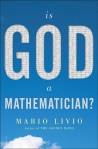
Is God a Mathematician? by Mario Livio begins

When you work in cosmology … one of the facts of life becomes the weekly letter, e-mail, or fax from someone who wants to describe to you his own theory of the universe (yes, they are invariably men). The biggest mistake you can make is to politely answer that you would like to learn more. This immediately results in an endless barrage of messages. So how can you prevent the assault? The particular tactic I found to be quite useful (short of the impolite act of not answering at all) is to point out the true fact that as long as his theory is not precisely formulated in the language of mathematics, it is impossible to assess its relevance. This response stops most amateur cosmologists in their tracks. … Mathematics is the solid scaffolding that holds together any theory of the universe.

Is God a Mathematician? discusses the question of whether mathematics was invented or discovered. Dr. Livio’s other popular books include The Accelerating Universe (cosmology), The Golden Ratio: The Story of Phi, the World’s most Astounding Number, and The Equation that Couldn’t be Solved: How Mathematical Genius Discovered the Language of Symmetry. All are excellent reads for teachers and students. 

The Unknown Thing

Here’s why x is so ubiquitous in mathematics.

Now one more unknown thing is known!

This TED Talk can be found here.


About this blog …

Welcome!

This blog is for high school calculus teachers and students, and others interested in teaching and learning calculus. It will consist of comments, suggestions, hints and observations on the topics in the course. I will try to follow the usual order of topics found in most textbook and post on topics a week or two before they come up so you will have time to think them over and incorporate them into your course if you find them helpful.

PLEASE use the comment links at the end of each post if you have any helpful suggestions or comments on the post. Let me know if you spot a mistake or typo so I can fix it. If you have something longer, please send it to me by e-mail by clicking here: Lin McMullin and I’ll consider posting it separately with your name.

Please share the link with anyone you think might be interested.

Thanks and I hope you find this interesting and helpful.

Lin