October 2015

A personal note: My wife and I just moved from Texas back to Saratoga County, New York where I spend 29 years teaching. My seven and one-half years in Texas were a lot of fun. I had the opportunity to travel all over the USA from Boston to Honolulu, working with calculus teachers, which I really enjoyed. But we just missed the snow and taxes, so here we are. We spent the last six weeks or so traveling the country. That was not quite our plan, but our new house was still under construction and not ready. Today, we moved in; in a few days our furniture will arrive from Texas – we hope.

I guess this will make me re-semi-retired (if that’s a word). I’ll still be writing and doing workshops and whatever else comes along.


He is the list of topic that may be of interest in October. Most were written in the first year (2012) when I was trying to go through the curriculum more-or-less in order staying a little ahead of where I figured you would be. So they should be useful now. Others were written later and are included since they fit in the order. The four on the main page under this one are the most popular from October in the last year.  “Reading the Derivative’s Graph” remains the all-time high with over 3200 hits.

October 1, 2012, The Mean Value Theorem II

August 18, 2014 Darboux’s Theorem

October 3, 2012 Derivative Practice – Numbers

October 5, 2012 Derivative Practice – Graphs

October 8, 2012 Related Rate Problems I

October 10, 2012 Related Rate Problems II

October 12, 2012 Why Radians?

October 15, 2012 Concepts Related to Graphs

October 17, 2012 The Shapes of a Graph

October 19, 2012 Joining the Pieces of a Graph

October 22, 2012 Extreme Values

October 23, 2104 The Marble and the Vase An extreme value problem.

May 13, 2015 Soda Cans or why cans are not made in the “best” shape.

October 24, 2012 Concavity

October 26, 2012 Reading the Derivative’s Graph

October 29, 2012 Real “Real Life” Graphing

October 31, 2012 Far Out


.

Matching Motion

Particle motion 2

Here’s a little matching quiz. In the function column there is a list of properties of functions and in the motion column are a list of terms describing the motion of a particle. The two lists are very similar. Match the terms in the function list with the corresponding terms in the Linear Motion list (some may be used more than once). The answers are below. For more on this idea see my previous post Motion Problems: Same Thing, Different Context.

Function                                               Linear Motion
1. Value of a function at x                     A. acceleration
2. First derivative                                  B. “at rest”  
3. Second derivative                             C. farthest left 
4. Function is increasing                       D. farthest right
5. Function is decreasing                      E. moving to the left or down 
6. Absolute Maximum                          F. moving to the right or up
7. Absolute Minimum                            G. object changes direction
8. y ʹ = 0                                                H. position at time t
9. y ʹ changes sign                                I. speed 
10. Increasing & concave up                J. speed is decreasing
11. Increasing & concave down           K. speed is increasing
12. Decreasing & concave up              L. velocity
13. Decreasing & concave down             
14. Absolute value of velocity      


Answers:  1. H,   2. L,   3. A,   4. F,   5. E,   6. D,   7. C,   8. B,   9. G,   10. K,   11. J,   12. J,   13. K,   14. I


August 2015

I know a lot of you start back to school later this month. Having taught most of my career in New York I’m used to school starting after Labor Day (and ending in late June six weeks after the AP exams), so I still think of August as summer vacation.

Whenever you start, I hope this blog will help you with your calculus classes. If you are new here or a regular reader, please look at the tab “Thru the Year” on the navigation bar above. This is a list of my blog topics by month. To stay a bit ahead of where you are, the August list contains topics from the beginning of the year through September. September’s list is topics for October and so on. This is so you can read them and think about them, before you teach them. August has been updated and the other months will be updated each month.

The four featured post are the most popular, or at least the most read, from past Augusts.

As always, you may use the “Search,” “Posts by Topic,” and “Archives” features in the right sidebar below to find topics you are interested in. There is a “Leave a Reply” link at the very end of each post where you may post your ideas, comments, and questions.  Please do so as I really like the feedback.


Here is a link to an interesting story on a working mathematician that I found fascinating. I hope you like it too. It is by Gareth Cook originally appeared in the New York Times on July 24, 2015.

THE SINGULAR MIND OF TERRY TAO


On a personal note, I am moving from Texas back to Saratoga County, New York at the end of this month. My wife and I miss the snow and the taxes, or maybe my wife wants to live close to her sister – one of those. I came here in 2008 and enjoyed living and working here, in Arkansas, and in Hawai’i in the last seven and one-half years. Texas is a great place. But upstate New York is nice too. I will retire a little more than I have this year, but the blog will continue.

Calculus Camp

Today I welcome a guest blogger. Robert Vriesman writes about his Calculus Camp. The annual camp is a great review technique. I was honored to be invited this year and had a great time helping the kids. Thank you Robert for the Blog and the weekend with your students

Many high schools around the nation have only eight to fifteen kids taking Calculus in any given school year. So what are the teachers at the Los Angeles Center for Enriched Studies (LACES) doing differently along with generous help from professors, math professionals, and some parents doing to attract upwards of 200 students to take Calculus each year? The answer…Calculus Camp!

Calculus Camp was first organized by me fourteen years ago when I was LACES Department Chair. The camp began with only forty students and just a handful of teachers, but the excitement generated by the opportunity to go to camp to help them prepare for the College Board Advanced Placement Test increased the number of students taking Calculus each year. The past three years LACES has had over 200 students taking Advanced Placement mathematics.

LACES was already a high-achieving school, but this did not mean there were not a lot of challenges. The camp was large scale effort requiring a large-scale commitment on the part of the mathematics department. Our objectives of our Calculus Camp are:
• to create a support structure necessary to make high achievement by all AP mathematics students a reality.
• to enhance all students’ achievement by creating an environment that would cause them to take a new look at higher levels of mathematics.
• to build a mathematics program so strong and inviting that a large percentage of students-perhaps even every student-could be prepared to successfully complete challenging mathematics courses such as calculus before leaving LACES.
• to further increase participation in Advanced Placement Mathematics classes and to improve the pass rate of our students taking Advanced Placement Mathematics classes.
• to provide an opportunity for students to meet and work with people actively involved in a career in mathematics.

The students load the buses at noon on a Thursday to travel to Calculus Camp in the San Gabriel Mountains 90 minutes north of Los Angeles. The students are kept quite busy over the course of the weekend with two study sessions on Thursday, and three each on Friday and Saturday. Over the weekend they put in as many as 24 hours doing Calculus. They take a mock test on Sunday morning as a way of gauging their progress over the course of the weekend.

Teachers from LACES, other teachers, professors, and professional mathematicians are invited to come to Calculus Camp to help the students of LACES. Dr. Michael Raugh of Harvey Mudd College (retired), Dr. Kyran Mish formerly of the University of Oklahoma, and Dr. D. Lewis Mingori of UCLA (retired) have come back year after year to help the LACES students. This past year Lin McMullin attended the LACES Calculus Camp for the first time! Former colleagues of mine C. Dean Becker and Ken Bailey have also been a huge help over the years. This interaction with the adult professionals is something that is different from the ordinary in their lives. The benefit to the students is not measurable in a traditional sense, but it is undeniable for all those that see it working during the weekend. The past few years has seen an increase in the number of former LACES students who return to Calculus Camp to help the current LACES students. These former students returning to Calculus Camp is a testament to what the camp has meant to their lives.

The students work in groups of four or five; the teachers and mentors respond when a group needs assistance. It is the other students in the group that are the first resource. Teachers act not as a tutor, but as a mentor ready to help a group of students who are working together on a problem with a direction or a suggestion, not necessarily with a solution. This group of students is sitting in a room with other groups of students working on other problems; a community all working together to the same end. They gain confidence from the group experience to be able later to go it alone.

This slideshow requires JavaScript.

In between the study sessions there is lots of interaction among students, teachers, and mentors. Those at the camp see and feel the intangible benefits these students derive from the camp experience from this interaction. It was great to see an actuary named Alejandro Ortega playing volleyball with a group of students and to hear Nick Mitchell (a retired actuary) explain to a group of students at lunch explain just what Actuarial Science is. To see the college professors, interact with high school students, to see the students asking them questions in a comfortable setting in not an everyday occurrence.

What has all this meant to the students of the Los Angeles Center for Enriched Studies? We have had many more students go into fields involving mathematics than in previous years. There are at least three students who went to college intending to study Actuarial Science in the past two years alone. Our pass rate has improved dramatically on the College Board Advanced Placement Calculus Tests. More students are taking Precalculus courses than ever before because they too want to go to Calculus Camp. Out of a department of nine mathematics teachers, five different teachers are teaching a total of seven Advanced Placement Mathematics classes.

On Sunday morning the students take a mock AP test to demonstrate to themselves what they learned. It makes them fully aware of the testing format and the length of various sections of the exam so there are no surprises on the day of the actual AP test.

There is plenty of fun built into the schedule as well. There is a bonfire on Thursday night, and a concert on Friday night and a talent show on Saturday night. This year I invited a friend from mine from college days, Sgt. Major Woodrow English, U.S. Army (Ret.), who was the principal trumpet in the U.S. Army band in Washington, D.C. for 30 years to play a concert on Friday night (and reveille every morning). English came all the way from Virginia to attend the camp this year. The music he provided seemed to “set the tone” for the students. Listening to a world class musician and working with world class mathematicians inspired the students to work hard and to give their best. And “Woody” gained a new appreciation for teachers and their dedication to their students.

If you have questions about starting your own Calculus Camp contact me, Robert Vriesman, at rvriesman@hotmail.com.

May

Only a few days until the AP Calculus Exams!

Time to get psyched-up!

Here is some final advice to your students about How, not only to Survive the AP Calculus exam, but to prevail …

And a previous post on Getting Ready for the Exam with last-minute advice.

Good Luck to all your students – but you’ve done a good job so luck won’t really be necessary.


Looking forward to the summer, I am leading two BC Calculus Advanced Placement Summer Institutes. Here is the information:

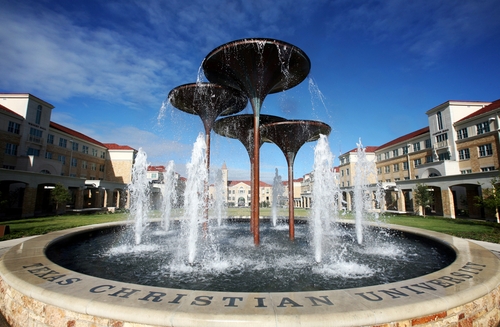
AP Summer Institute at TCU in Fort Worth, Texas

TCU pix

  • For experienced BC teachers
  • Monday June 15 to Thursday June 18, 2015 from 8:00 AM to 4:30 PM
  • Information and registration: ap.tcu.edu.
  • TCU’s Office of Extended Education
    Telephone: 817.257.7132
    Fax: 817.257.7134


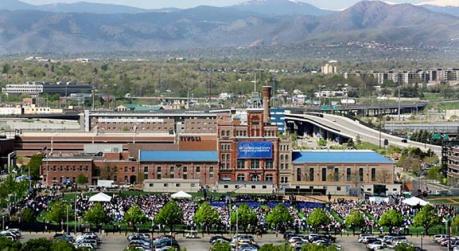
AP Summer Institute at Metropolitan State University in Denver, Colorado

Metro in Denver

  • For new and experienced BC teachers
  • Tuesday July 14 to Friday July 17, 2015 from 8:00 am to 4:30 pm
  • At the Metropolitan State University, 890 Auraria Parkway, Denver, 80204
  • Information and registration:  http://www.coloradoedinitiative.org/2015-apsi/
  • The Colorado Education Initiative
    1660 Lincoln Street, Suite 2000
    Denver, CO 80264
    (303) 736-6477 | (866) 611-7509 (f)
    info@coloradoedinitiative.org

微积分

 微积分 is Chinese for calculus.

I spent the last week in China and Taiwan doing two workshops for AP Calculus teachers for the College Board. It was an interesting and fun trip for me.

To get to China from Dallas you fly due north almost to the North Pole and then turn left and fly south over Siberia, Mongolia, and into China.

The flight took 15 hours. In Shanghai I met the others in our group. Shanghai is a modern city of over 14 million people. There are many tall office buildings and apartment houses. Driving in from the airport in the evening I was struck by how dark the city appeared. The office workers had gone home and all the office lights were out. Neither the offices nor the apartments had the outside lighting so everything looked dark. There were many cars and of course the resulting traffic jams. Electric motor scooters were popular.We spent the next day sightseeing and shopping and resting.

Our first workshop was in Suzhou a city of 4.3 million a two-hour drive west from Shanghai. Actually, the two cities sort of run together with little open land between them. We toured the old part of the city – an area connected by narrow canals and bridges.

Then we continued another hour to the modern part of the city and got down to work setting up our classrooms and getting organized.

The two-day workshops started the next morning. The sessions were held at the Suzhou Foreign Language School, a K – 12 boarding school. The participants were teachers from all over China who, for the most part, were planning to teach AP next year. We had over 270 participants in AP Calculus, Economics, English Language and Composition, Geography, Psychology, Statistics, and pre-AP English, and an additional session for administrators. Most of the participants were Chinese teachers, the others were ex-pats from several countries teaching in China all with a good command of English.
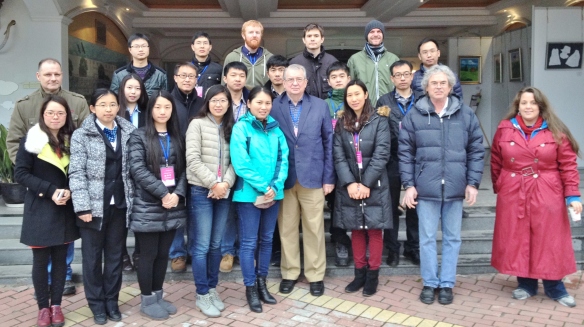
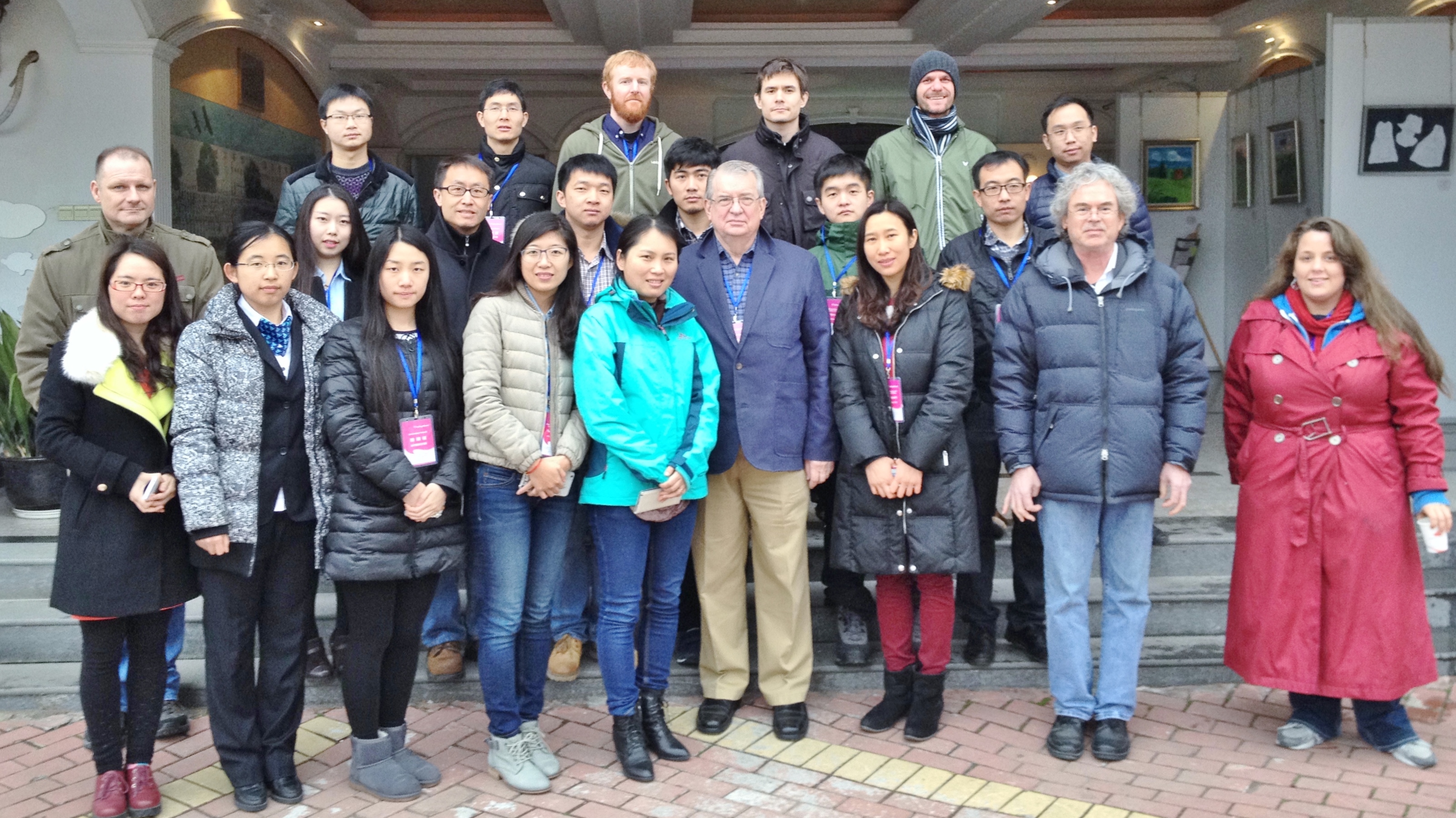
IMG_0342

My calculus group at the workshop

My session was one of two in AP Calculus. The other was led by Tim Zitur, an American living in Singapore, who is an experienced table leader and workshop leader.  The sessions were conducted in English which all of the participant understood. The questions and discussions were very much the same as any workshop in the USA.

Students in China take AP courses so that they can apply to schools in the USA. In China, students take one test before they apply to college. Talk about high-stakes testing: a high score on the exam allows them to apply to the best colleges in China; a lower score prohibits them from applying to the best colleges. A difference of one point can move over 100,000 students from one category to the other. To avoid this, students whose families can afford it send their child to a school in America and use AP credit help then get accepted here.

We were always made to feel welcome. The school took the presenters to a very nice restaurant on the fourth floor of a local mall (you’d recognize a lot of the stores) where we had a Chinese dinner of about two-dozen courses! We all sat at a round table with a huge lazy-Susan as the dishes went around.

After the second day we were driven back to Shanghai; everyone fell asleep on the two-hour trip.

The next morning we were up early for a flight to Taiwan for our next meeting in Taichung. Taichung is a two-hour ride from the airport in Taipei. It is the third largest city in Taiwan with a population of 2.6 million.

The night we arrived we visited the Taichung Lantern Festival. The Chinese New Year’s season was in full swing. We entered what looked like a typical American fair – lots of small booths each serving a different kind of food. Then we headed to the display area. There were acres and acres of large colorful figures made of cloth stretched over heavy wire frames and lit from the inside with colored lights. Beautiful and difficult to describe. Notice the size of the people silhouetted in the pictures below.

There were thousands of people of all ages in attendance, yet I saw no one smoking and there was not a bit of trash or litter on the ground.

Our meetings the next day were at the National Taichung Girls’ Senior High School. The purpose of this meeting was to introduce Advanced Placement to the teachers and administrators. The plenary sessions were in Chinese. While they were going on Tai Hus-Chang, the principal of the school, showed us around. The classes had over 40 girls each. The girls stay in the rooms and the teachers move from class to class. The pupils were very eager to speak to us and spoke very good English.
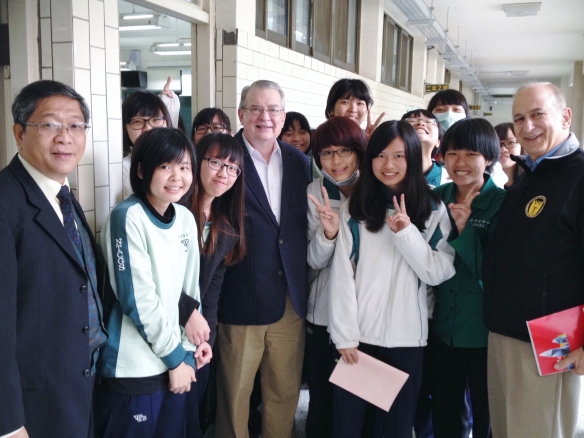
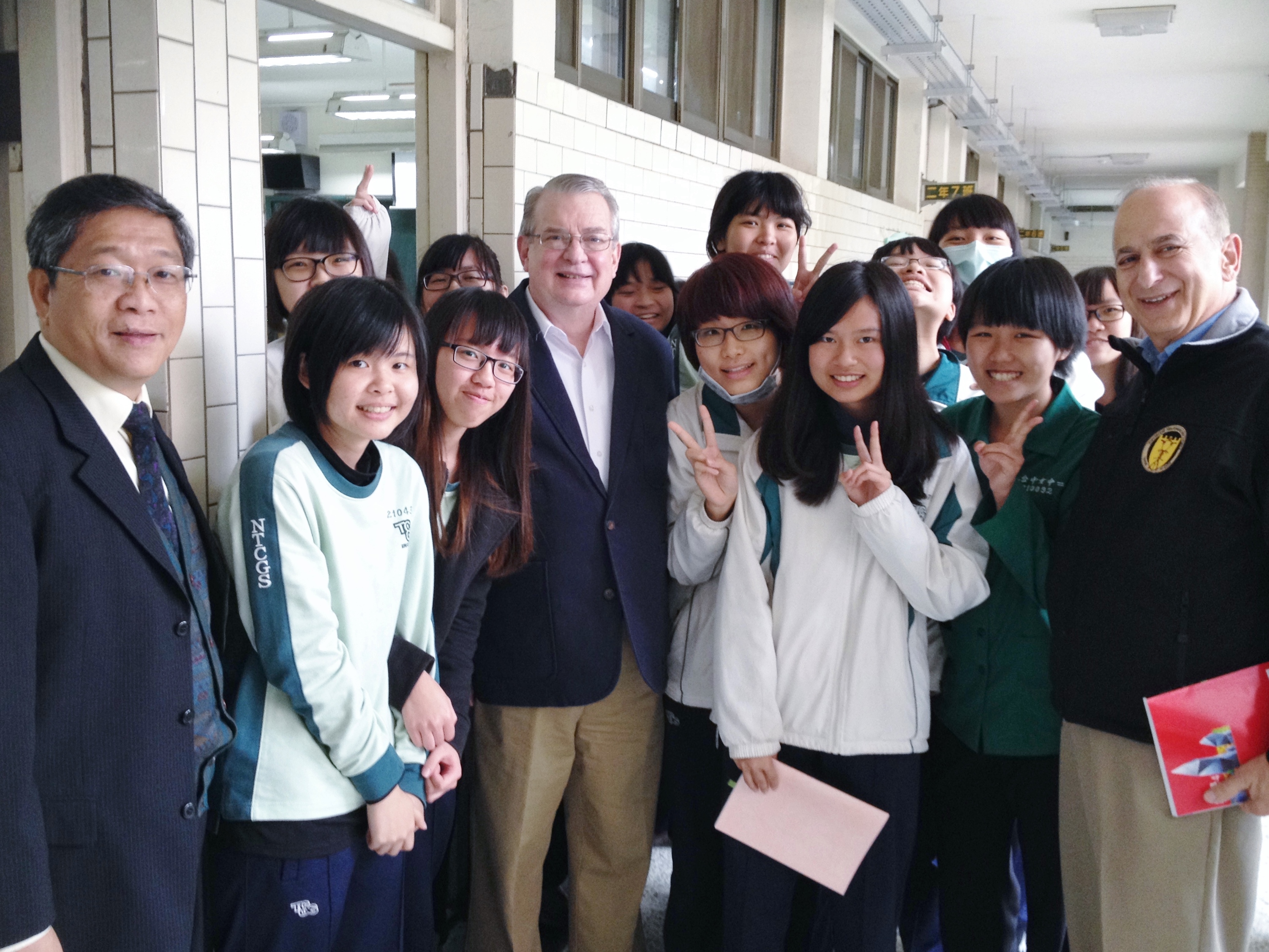
IMG_0407

Students from the National Taichung Girls’ High School with Tai Hsu-Chang, the principal, me, and Marty Sternstein, the AP Statistics presenter.

I had a look at an eleventh grade math textbook. The book was in Chinese of course. It included solid geometry, the three-dimensional equations of lines, solving systems of three equations by determinants (in the context of the intersection of planes), matrices (including translations and rotation matrices), and a complete chapter on the conic sections. The book had very little text, no sidebars, and very little in the way of pictures not related to the problems.  The mathematics was written in standard notation with English letters for the variables.

I lead two breakout sessions. The first for teachers was a quick introduction to AP Calculus. Students joined us for the second breakout session. I taught a demonstration lesson using the Rule of Four and technology to present the average value of a function. Since the “calculus” came only at the end the students seemed to understand what was going on well enough. My translator (for the teachers) was Dr. Bo Wang, vice-president of the College Board and the leader of the trip.

We were treated to another nice dinner by the president of the Parent Teachers Organization: ten delicious courses.

Then the next day was the long trip home. It was quite a trip and interesting to see mathematics, calculus, teachers, and students in another part of the world.

My New Calculator

I bought a new handheld calculator!Curta-1

Actually, it is not new; it was made about 1965. It is a Curta Type I.

Curta calculators were invented by Curt Herzstark (1902 – 1988) who, according to Wikipedia:

… was born in Vienna, the son of Marie and Samuel Jakob Herzstark. His father was Jewish and his mother, born a Catholic, converted to Lutheranism and raised Herzstark Lutheran.[1][2] In 1938, while he was technical manager of his father’s company Rechenmaschinenwerk AUSTRIA Herzstark & Co., Herzstark had already completed the design, but could not manufacture it due to the Nazi German annexation of Austria. … perhaps influenced by the fact that his father was a liberal Jew, the Nazis arrested him for “helping Jews and subversive elements” and “indecent contacts with Aryan women” and sent him to the Buchenwald concentration camp. However, the reports of the army about the precision-production of the firm AUSTRIA and especially about the technical expertise of Herzstark led the Nazis to treat him as an “intelligence-slave”.… he was called to work in the factory linked to the camp…. There he was ordered to make a drawing of the construction of his calculator, so that the Nazis could ultimately give the machine to the Führer as a gift after the successful end of the war. The preferential treatment this allowed ensured that he survived his stay at Buchenwald until the camp’s liberation in 1945, by which time he had redrawn the complete construction from memory.[3]

After the war he moved to Liechtenstein. In 1947 they started building and selling the calculators. Production continued until 1971 when handheld electronic calculators became widely available. In that time 79,572 Type I and 61,660 Type II machines were built. The Type II calculators have an additional two figures accuracy.

The calculator, which has about 600 parts, is based in the stepped cylinder (also called the Leibniz wheel) invented by Gottfried Wilhelm Leibniz who, as I recall, also did some work in calculus. The stepped cylinder has been used in calculating machines since Leibniz’s time.

Here is an excellent video animation explaining how the calculator works.

Of course all it does is add. Subtraction is accomplished using nines complement arithmetic, Since multiplication is repeated addition and division is repeated subtraction, it can also do those operations. But then things get interesting. There are lots of other arithmetic operations that can be done on a Curta calculator. They make use of various numerical algorithms for engineering, and business applications. If you are interested in more about this click here. For a quick example, the video below shows how to calculate square roots on a Curta using the idea that the square of any positive integer, n, is the sum of the first n odd integers, {{n}^{2}}=1+3+5+\cdots +\left( 2n-1 \right)  There are actually several algorithms for square roots and others for cube roots.

There is a Curta Calculator website. Here you will find lots of information about the Curta calculators including technical information and drawings, historical material, pictures, articles, simulators, cleaning and repair instructions, photos and videos.

Now, if I could just figure out where the batteries go….

.