Graph Analysis Questions (Type 3)

AP  Questions Type 3: Graph Analysis

The long name is “Here’s the graph of the derivative, tell me things about the function.”

Students are given either the equation of the derivative of a function or a graph identified as the derivative of a function with no equation is given. It is not expected that students will write the equation of the function from the graph (although this may be possible); rather, students are expected to determine important features of the function directly from the graph of the derivative. They may be asked for the location of extreme values, intervals where the function is increasing or decreasing, concavity, etc. They may be asked for function values at points. They will be asked to justify their conclusions.

The graph may be given in context and student will be asked about that context. The graph may be identified as the velocity of a moving object and questions will be asked about the motion. See Linear Motion Problems (Type 2)

Less often the function’s graph may be given and students will be asked about its derivatives.

What students should be able to do:

  • Read information about the function from the graph of the derivative. This may be approached by derivative techniques or by antiderivative techniques.
  • Find and justify where the function is increasing or decreasing.
  • Find and justify extreme values (1st and 2nd derivative tests, Closed interval test a/k/a Candidates’ test).
  • Find and justify points of inflection.
  • Find slopes (second derivatives, acceleration) from the graph.
  • Write an equation of a tangent line.
  • Evaluate Riemann sums from geometry of the graph only. This usually involves familiar shapes such as triangles or semicircles.
  • FTC: Evaluate integral from the area of regions on the graph.
  • FTC: The function, g(x), maybe defined by an integral where the given graph is the graph of  the integrand, f(t), so students should know that if,
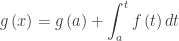
\displaystyle g\left( x \right)=g\left( a \right)+\int_{a}^{t}{f\left( t \right)dt} then  {g}'\left( x \right)=f\left( x \right)  and  {{g}'}'\left( x \right)={f}'\left( x \right).

In this case, students should write {g}'(t)=f\left( t \right) on their answer paper, so it is clear to the reader that they understand this.

Not only must students be able to identify these things, but they are usually asked to justify their answer and reasoning. See Writing on the AP Exams for more on justifying and explaining answers.

The ideas and concepts that can be tested with this type question are numerous. The type appears on the multiple-choice exams as well as the free-response. Between multiple-choice and free-response this topic may account for 15% or more of the points available on recent tests. It is very important that students are familiar with all the ins and outs of this situation.

As with other questions, the topics tested come from the entire year’s work, not just a single unit. In my opinion many textbooks do not do a good job with integrating these topics, so be sure to use as many actual AP Exam questions as possible. Study past exams; look them over and see the different things that can be asked. The Graph Analysis problem may cover topics primarily from primarily from Unit 4, Unit 5, and Unit 8 of the 2019 CED 

For some previous posts on this subject see October 1517192426 (my most read post), 2012 and  January 2528, 2013

Free-response questions:

  • Function given as a graph, questions about its integral (so by FTC the graph is the derivative):  2016 AB 3/BC 3, 2018 AB3
  • Table and graph of function given, questions about related functions: 2017 AB 6,
  • Derivative given as a graph: 2016 AB 3 and 2017 AB 3
  • Information given in a table 2014 AB 5

Multiple-choice questions from non-secure exam. Notice the number of questions all from the same year; this is in addition to one free-response question (~25 points on AB and ~23 points on BC out of 108 points total)

  • 2012 AB: 2, 5, 15, 17, 21, 22, 24, 26, 76, 78, 80, 83, 82, 84, 85, 87
  • 2012 BC 3, 11, 12, 15, 12, 18, 21, 76, 78, 80, 81, 84, 88, 89

A good activity on this topic is here. The first pages are the teacher’s copy and solution. Then there are copies for Groups A, B, and C. Divide your class into 3 or 6 or 9 groups and give one copy to each. After they complete their activity have the students compare their results with the other groups.


Revised March 12, 2021


Linear Motion (Type 2)

AP  Questions Type 2: Linear Motion

We continue the discussion of the various type questions on the AP Calculus Exams with linear motion questions.

“A particle (or car, person, or bicycle) moves on a number line ….”

These questions may give the position equation, the velocity equation (most often), or the acceleration equation of something that is moving on the x– or y-axis as a function of time, along with an initial condition. The questions ask for information about motion of the particle: its direction, when it changes direction, its maximum position in one direction (farthest left or right), its speed, etc.

The particle may be a “particle,” a person, car, a rocket, etc.  Particles don’t really move in this way, so the equation or graph should be considered to be a model. The question is a versatile way to test a variety of calculus concepts since the position, velocity, or acceleration may be given as an equation, a graph, or a table; be sure to use examples of all three forms during the review.

Many of the concepts related to motion problems are the same as those related to function and graph analysis (Type 3). Stress the similarities and show students how the same concepts go by different names. For example, finding when a particle is “farthest right” is the same as finding the when a function reaches its “absolute maximum value.” See my post for Motion Problems: Same Thing, Different Context for a list of these corresponding terms. There is usually one free-response question and three or more multiple-choice questions on this topic.

The positions(t), is a function of time. The relationships are:

  • The velocity is the derivative of the position, {s}'\left( t \right)=v\left( t \right). Velocity is has direction (indicated by its sign) and magnitude. Technically, velocity is a vector; the term “vector” will not appear on the AB exam.

  • Speed is the absolute value of velocity; it is a number, not a vector. See my post for Speed.
  • Acceleration is the derivative of velocity and the second derivative of position, \displaystyle a\left( t \right)={v}'\left( t \right)={{s}''}\left( t \right). It, too, has direction and magnitude and is a vector.
  • Velocity is the antiderivative of the acceleration.
  • Position is the antiderivative of velocity.

What students should be able to do:

  • Understand and use the relationships above.
  • Distinguish between position at some time and the total distance traveled during the time period.
  • The total distance traveled is the definite integral of the speed (absolute value of velocity) \displaystyle \int_{a}^{b}{\left| v\left( t \right) \right|}\,dt.
  •  Be sure your students understand the term displacement; it is the net distance traveled or distance between the initial position and the final position. Displacement, is the definite integral of the velocity (rate of change): \displaystyle \int_{a}^{b}{v\left( t \right)}\,dt.
  • The final position is the initial position plus the displacement (definite integral of the rate of change from xa to x = t): \displaystyle s\left( t \right)=s\left( a \right)+\int_{a}^{t}{v\left( x \right)}\,dx Notice that this is an accumulation function equation (Type 1).
  • Initial value differential equation problems: given the velocity or acceleration with initial condition(s) find the position or velocity. These are easily handled with the accumulation equation in the bullet above, but may also be handled as an initial value problem.
  • Find the speed at a given time. The speed is the absolute value of the velocity.
  • Find average speed, velocity, or acceleration
  • Determine if the speed is increasing or decreasing.
    • If at some time, the velocity and acceleration have the same sign then the speed is increasing.If they have different signs the speed is decreasing.
    • If the velocity graph is moving away from (towards) the t-axis the speed is increasing (decreasing). See the post on Speed.
    • There is also a worksheet on speed here
    • The analytic approach to speed: A Note on Speed
  • Use a difference quotient to approximate the derivative (velocity or acceleration) from a table. Be sure the work shows a quotient.
  • Riemann sum approximations.
  • Units of measure.
  • Interpret meaning of a derivative or a definite integral in context of the problem

Shorter questions on this concept appear in the multiple-choice sections. As always, look over as many questions of this kind from past exams as you can find.

This may be an AB or BC question. The BC topic of motion in a plane, (Type 8: parametric equations and vectors) will be discussed in a later post.

The Linear Motion problem may cover topics primarily from primarily from Unit 4, and also from Unit 3, Unit 5, Unit 6, and Unit 8 (for BC) of the 2019 CED

Free-response examples:

  • Equation stem 2017 AB 5,
  • Graph stem: 2009 AB1/BC1,
  • Table stem 2019 AB2

Multiple-choice examples from non-secure exams:

  • 2012 AB 6, 16, 28, 79, 83, 89
  • 2012 BC 2, 89


Rate & Accumulation (Type 1)

The Free-response Questions

There are ten general categories of AP Calculus free-response questions.

NOTE: The type number I’ve assigned to each type DO NOT correspond to the 2019 CED Unit numbers. Many AP Exam questions have parts from different Units. The CED Unit numbers will be referenced in each post.


AP  Questions Type 1: Rate and Accumulation

These questions are often in context with a lot of words describing a situation in which some things are changing. There are usually two rates acting in opposite ways (sometimes called an in-out question). Students are asked about the change that the rates produce over some time interval either separately or together.

The rates are often fairly complicated functions. If they are on the calculator allowed section, students should store the functions in the equation editor of their calculator and use their calculator to do any graphing,  integration, or differentiation that may be necessary.

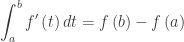
The main idea is that over the time interval [a, b] the integral of a rate of change is the net amount of change

\displaystyle \int_{a}^{b}{{f}'\left( t \right)dt}=f\left( b \right)-f\left( a \right)

If the question asks for an amount, look around for a rate to integrate.

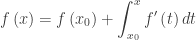
The final (accumulated) amount is the initial amount plus the accumulated change:

\displaystyle f\left( x \right)=f\left( {{x}_{0}} \right)+\int_{{{x}_{0}}}^{x}{{f}'\left( t \right)}\,dt,

where {{x}_{0}} is the initial time, and  f\left( {{x}_{0}} \right) is the initial amount. Since this is one of the main interpretations of the definite integral the concept may come up in a variety of situations.

What students should be able to do:

  • Be ready to read and apply; often these problems contain a lot of writing which needs to be carefully read.
  • Recognize that rate = derivative.
  • Recognize a rate from the units given without the words “rate” or “derivative.”
  • Find the change in an amount by integrating the rate. The integral of a rate of change gives the amount of change (FTC):

\displaystyle \int_{a}^{b}{{f}'\left( t \right)dt}=f\left( b \right)-f\left( a \right).

  • Find the final amount by adding the initial amount to the amount found by integrating the rate. If x={{x}_{0}} is the initial time, and f\left( {{x}_{0}} \right)  is the initial amount, then final accumulated amount is

\displaystyle f\left( x \right)=f\left( {{x}_{0}} \right)+\int_{{{x}_{0}}}^{x}{{f}'\left( t \right)}\,dt,

  • Write an integral expression that gives the amount at a general time. BE CAREFUL, the dt must be included at the correct place. Think of the integral sign and the dt as parentheses around the integrand.
  • Find the average value of a function
  • Understand the question. It is often not necessary to as much computation as it seems at first.
  • Use FTC to differentiate a function defined by an integral.
  • Explain the meaning of a derivative or its value in terms of the context of the problem. The explanation should contain (1) what it represents, (2) its units, and (3) how numerical argument applies in context.
  • Explain the meaning of a definite integral or its value in terms of the context of the problem. The explanation should contain (1) what it represents, (2) its units, and (3) how the limits of integration apply in context.
  • Store functions in their calculator recall them to do computations on their calculator.
  • If the rates are given in a table, be ready to approximate an integral using a Riemann sum or by trapezoids.
  • Do a max/min or increasing/decreasing analysis.

Shorter questions on this concept appear in the multiple-choice sections. As always, look over as many questions of this kind from past exams as you can find.

The Rate – Accumulation question may cover topics primarily from Unit 4, Unit 5, Unit 6 and Unit 8 of the 2019 CED.

Typical free-response examples:

Typical multiple-choice examples from non-secure exams:

  • 2012 AB 8, 81, 89
  • 2012 BC 8 (same as AB 8)


Updated January 31, 2019, March 12, 2021