The Lagrange Highway

Recently, there was an interesting discussion on the AP Calculus Community discussion boards about the Lagrange error bound. You may link to it by clicking here. The replies by James L. Hartman and Daniel J. Teague were particularly enlightening and included files that you may download with the proof of Taylor’s Theorem (Hartman) and its geometric interpretation (Teague).

There are also two good Kahn Academy videos on Taylor’s theorem and the error bound on YouTube. The first part is here (11:26 minutes) and the second part is here (15:08 minutes).

I wrotean earlier blog post on the topic of error bounds on February 22, 2013, that you can find here.

Taylor’s Theorem says that

If f is a function with derivatives through order n + 1 on an interval I containing a, then, for each x in I , there exists a number c between x and a such that

\displaystyle f\left( x \right)=\sum\limits_{k=1}^{n}{\frac{{{f}^{\left( k \right)}}\left( a \right)}{k!}{{\left( x-a \right)}^{k}}}+\frac{{{f}^{\left( n+1 \right)}}\left( c \right)}{\left( n+1 \right)!}{{\left( x-a \right)}^{n+1}}

The number \displaystyle R=\frac{{{f}^{\left( n+1 \right)}}\left( c \right)}{\left( n+1 \right)!}{{\left( x-a \right)}^{n+1}} is called the remainder.

The equation above says that if you can find the correct c the function is exactly equal to Tn(x) + R.

Tn(x) is called the n th  Taylor Approximating Polynomial. (TAP). Notice the form of the remainder is the same as the other terms, except it is evaluated at the mysterious c that we don’t know and usually are not able to find without knowing the value we are trying to approximate.

Lagrange Error Bound. (LEB)

\displaystyle \left| \frac{{{f}^{\left( n+1 \right)}}\left( c \right)}{\left( n+1 \right)!}{{\left( x-a \right)}^{n-1}} \right|\le \left( \text{max}\left| {{f}^{\left( n+1 \right)}}\left( x \right) \right| \right)\frac{{{\left| x-a \right|}^{n+1}}}{\left( n+1 \right)!}

The number \displaystyle \left( \text{max}\left| {{f}^{\left( n+1 \right)}}\left( x \right) \right| \right)\frac{{{\left| x-c \right|}^{n+1}}}{\left( n+1 \right)!}\ge \left| R \right| is called the Lagrange Error Bound. The expression \left( \text{max}\left| {{f}^{\left( n+1 \right)}}\left( x \right) \right| \right) means the maximum absolute value of the (n + 1) derivative on the interval between the value of x and c.

The LEB is then a positive number greater than the error in using the TAP to approximate the function f(x). In symbols \left| {{T}_{n}}\left( x \right)-f\left( x \right) \right|<LEB.

Here is a little story that I hope will help your students understand what all this means.

Building A Road

Suppose you were tasked with building a road through the interval of convergence of a Taylor Series that the function could safely travel on. Here is how you could go about it.

Build the road so that the graph of the TAP is its center line. The edges of the road are built LEB units above and below the center line. (The width of the road is about twice the LEB.) Now when the function comes through the interval of convergence it will travel safely on the road. I will not necessarily go down the center but will not go over the edges. It may wander back and forth over the center line but will always stay on the road. Thus, you know where the function is; it is less than LEB units (vertically) from the center line, the TAP.

Building a Wider Road

As shown in the example at the end of my previous post, it is often necessary to use a number larger than the minimum we could get away with for the LEB. This is because the maximum value of the derivative may be difficult to find. This amounts to building a road that is wider than necessary. The function will still remain within LEB units of the center line but will not come as close to the edges of our wider road as it may on the original road.  As long as the width of the wider road is less than the accuracy we need, this will not be a problem: the TAP will give an accurate enough approximation of the function.

Soda Cans

A typical calculus optimization question asks you to find the dimensions of a cylindrical soda can with a fixed volume that has a minimum surface area (and therefore is cheaper to manufacture).

Let r be the radius of the cylinder and h be its height. The volume, V, is constant and V=\pi {{r}^{2}}h. The surface area including the top and bottom is given by

S=2\pi rh+2\pi {{r}^{2}}

Since \displaystyle h=\frac{V}{\pi {{r}^{2}}}, the surface area, S, can be expressed as

S=2V{{r}^{-1}}+2\pi {{r}^{2}}

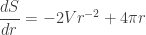
To find the value of r that will give the smallest surface area we find the derivative, set it equal to zero and solve for r:

\displaystyle \frac{dS}{dr}=-2V{{r}^{-2}}+4\pi r

This will equal zero when \displaystyle r=\sqrt[3]{\frac{V}{2\pi }} and substituting into the expression above \displaystyle h=\sqrt[3]{\frac{4V}{\pi }}.

Then \displaystyle \frac{h}{r}=\sqrt[3]{\frac{\frac{4V}{\pi }}{\frac{V}{2\pi }}}=2, so h=2r. In the optimum can the height is equal to the diameter.

The thing is that very few cans, especially beverage cans are anywhere near this “square “ shape. The closest I could find in my pantry was a tomato sauce can holding 8 oz. or 277 mL. The inside dimensions are about 65 cm. by 75cm.  Compare this to the 12 oz. soda can holding 355 mL. The usual reason given for this departure from the mathematically best shape is the taller can is easier to hold especially for children.

IMG_0442

What got me interested in this was the video below. While there is no overt calculus mentioned, there is a lot of math. There are also STEM considerations, specifically engineering. As you watch look for the math and engineering ideas that are mentioned and discuss them with your class. Here are a few:

  1. Geometry: Why a cylinder? Why not a sphere or a cube?
  2. Engineering: When cutting circles out of rectangular sheets of aluminum there is a lot of unused metal. Why is all this waste not a problem? This goes to materials engineering; steel is more difficult to recycle than aluminum.
  3. Math: Efficient packing is also a consideration. Check the calculations in the video as to the most efficient way (least empty space) to pack containers. Why do they not use the most efficient?
  4. Geometry: The (spherical) dome is a very strong shape. In what other places are domes used? Why?
  5. Engineering: How does pressurizing the cans make them stronger?
  6. Geometry and Engineering: The elongated ridges on the sides of non-pressurized steel cans strengthen the sides. How are these ridges similar to the dome or circular arch?
  7. Physics: Look for a discussion of first- and second-class leavers.
  8. Engineering: What other advantages are there to using the very thin aluminum can.

At the end of the video 6 other videos are mentioned. These are also interesting and show the same process in cartoon form and in video of the machines making cans. The links to these are here:

Rexam: http://www.youtube.com/watch?v=7dK1VV…
How It’s Made: http://www.youtube.com/watch?v=V7Y0zA…
Anim1: https://www.youtube.com/watch?v=WU_iS…
Anim2:https://www.youtube.com/watch?v=hcsDx…
Drawing: https://www.youtube.com/watch?v=DF4v-…
Redrawing: http://www.youtube.com/watch?v=iUAijp…

Teaching AP Calculus – The Book

I am happy to announce that the third edition of my book Teaching AP Calculus is now available.

Teaching AP Calculus - Third Edition

Teaching AP Calculus is a summer institute in book form. The third edition is one-third longer than the previous edition and contains more insights, thoughts, hints, and ideas that you will not find in textbooks. There are references to actual AP Calculus exam questions to help you understand how the concepts are actually tested. New teachers will find a place to begin, and experienced AP teachers will find a wealth of new ideas. Whether this is your first year or your twenty-fifth, there is something here for you.

The book has 295 pages of information with 23 chapters in three sections, plus 4 appendices and an index.

Section I The first section of Teaching AP Calculus is about what you should know to get started teaching an AP calculus course. It will tell you where to find resources. The Philosophy and Goals are explained. There is a chapter on finding and recruiting students, pacing and planning the year. A chapter is devoted to technology, especially the use of graphing calculators; this is an important part of the course. The last chapter in the section talks about the prerequisites and things students should know before they start AP calculus.

Section 2 The middle section of Teaching AP Calculus is the longest. In it all of the topics that should be included in the AB and BC courses are discussed: limits, derivatives and their applications, definite integrals and their applications, differential equations, and the additional topics of parametric and polar equations, and power series that are tested on only the BC exam.

These chapters present ideas about how to present the topics. The chapters include some classroom activities. The last chapter is concerned with the writing that students must do on the exams: how to justify and explain their answers.

Margin references lead the reader to actual AP Calculus exam questions on all the important concepts.

Section 3 The last section of Teaching AP Calculus is about the AP exams. Here you will learn how the exams are made up and graded. You will learn how to read the scoring standards. The “type” questions on the exams are each discussed in detail along with what your students should know about them. The final chapter is for you and especially your students. It has lots of information and hints on how to do well on the AP calculus exams.

Teaching AP Calculus may be ordered online at http://www.dsmarketing.com/teapca.html. The website includes sample sections from the book and downloads of calculator programs mentioned in the book.

I hope both new and experienced teachers will find Teaching AP Calculus useful  and informative.

AP Summer Institute leaders: To obtain complimentary examination copy of Teaching AP Calculus, third edition, to show your participants email info@dsmarketing.com. Please include your full name, complete shipping address with zip code, and the location and date of your APSI. 

May

Only a few days until the AP Calculus Exams!

Time to get psyched-up!

Here is some final advice to your students about How, not only to Survive the AP Calculus exam, but to prevail …

And a previous post on Getting Ready for the Exam with last-minute advice.

Good Luck to all your students – but you’ve done a good job so luck won’t really be necessary.


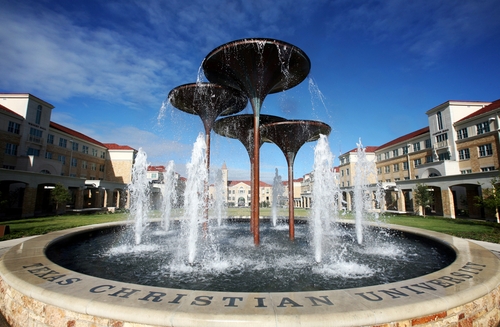
Looking forward to the summer, I am leading two BC Calculus Advanced Placement Summer Institutes. Here is the information:

AP Summer Institute at TCU in Fort Worth, Texas

TCU pix

  • For experienced BC teachers
  • Monday June 15 to Thursday June 18, 2015 from 8:00 AM to 4:30 PM
  • Information and registration: ap.tcu.edu.
  • TCU’s Office of Extended Education
    Telephone: 817.257.7132
    Fax: 817.257.7134


AP Summer Institute at Metropolitan State University in Denver, Colorado

Metro in Denver

  • For new and experienced BC teachers
  • Tuesday July 14 to Friday July 17, 2015 from 8:00 am to 4:30 pm
  • At the Metropolitan State University, 890 Auraria Parkway, Denver, 80204
  • Information and registration:  http://www.coloradoedinitiative.org/2015-apsi/
  • The Colorado Education Initiative
    1660 Lincoln Street, Suite 2000
    Denver, CO 80264
    (303) 736-6477 | (866) 611-7509 (f)
    info@coloradoedinitiative.org